Automotive Business Licensing Requirements: The Complete for 2026
Starting (or expanding) an automotive company is exciting—until you hit the paperwork wall. Automotive business licensing requirements can feel overwhelming because they’re not a single license.
They’re a stack of registrations, permits, and ongoing compliance duties that change based on your business model, your location, and what you touch (vehicles, money, hazardous materials, customers’ personal data, and more).
This guide breaks down automotive business licensing requirements by business type (dealer, repair shop, body shop, towing, parts, mobile mechanic, fleet service, and hybrids). It also explains why the rules exist, what inspectors look for, what commonly gets owners fined, and how to build a compliance system that scales.
Throughout, you’ll see recurring themes: state-level licensing, local permits, and federal rules that kick in when you handle regulated activities. The Small Business Administration notes that most businesses need a combination of federal, state, and local licenses and permits depending on activity and location.
Why automotive business licensing requirements are different from most industries
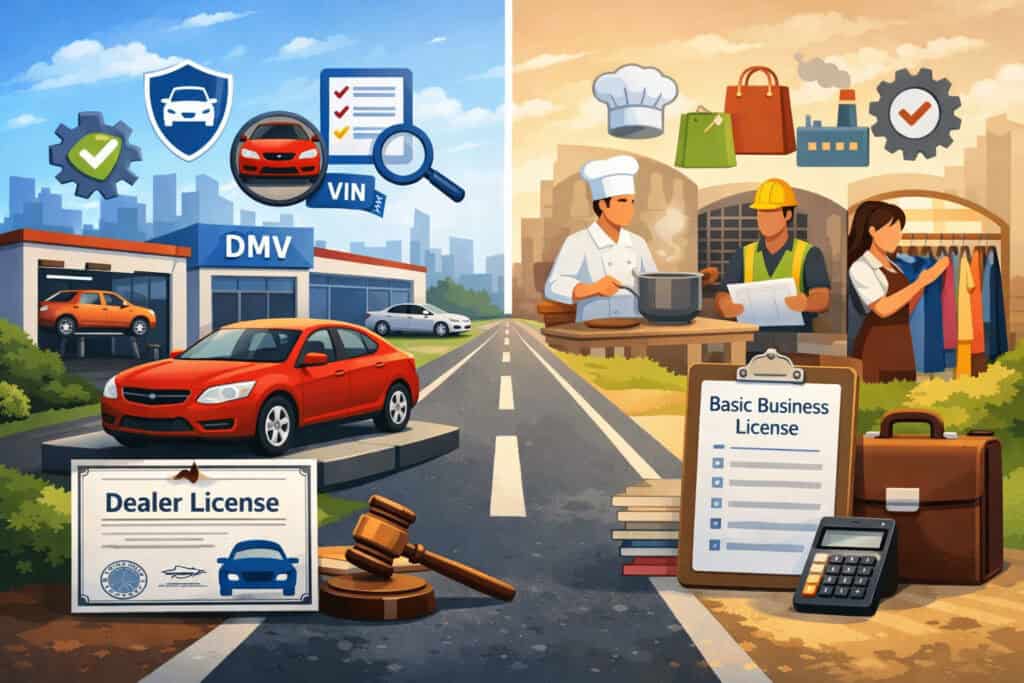
Many industries need a basic business license, tax IDs, and maybe a health or fire permit. Automotive businesses often need all of that—plus extra rules because you operate around:
- Public safety risks (lifts, road tests, tires, braking systems)
- Environmental risks (used oil, coolant, solvents, paint, batteries)
- Consumer financial risks (large purchases, financing, add-ons, warranties)
- Regulated inventory (titled vehicles, salvage vehicles, odometer reporting)
- Transportation risks (towing, hauling, interstate operations)
That’s why automotive business licensing requirements usually include (1) company formation and tax IDs, (2) location and zoning approvals, (3) trade-specific licenses, (4) environmental and safety compliance, and (5) consumer-protection disclosures.
If you plan ahead, you can build a “compliance-first” operation that passes inspections faster, reduces insurance costs, prevents shutdowns, and makes expansion into new locations far easier.
Choose your automotive business model first (because licensing depends on it)
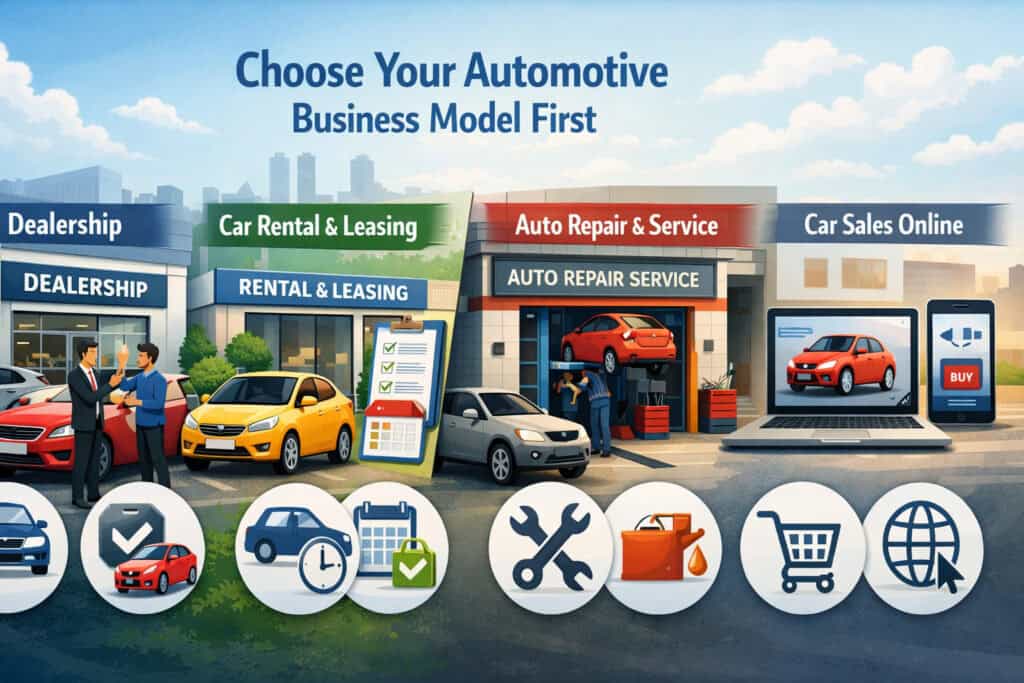
Before you apply for anything, lock down what you actually do. Automotive business licensing requirements vary dramatically between these common models:
Repair shop and maintenance garage
Typical work: brakes, suspension, diagnostics, AC, electrical, tires, oil changes.
Licensing tends to center on: local business licensing, zoning, building/fire approvals, waste handling, and customer invoicing requirements.
Collision repair and auto body with paint
Typical work: bodywork, paint prep, spraying, refinishing.
Licensing expands to: air emissions rules, paint booth permissions, hazardous material storage, and worker safety documentation. EPA has a specific “Auto Body Rule” for certain paint stripping and surface coating operations.
Used vehicle dealer (independent lot)
Typical work: buying/selling titled vehicles, advertising, test drives, trade-ins, financing, consignment. Licensing often includes: dealer license, dealer bond, sales tax registration, and mandatory buyer disclosures such as the FTC “Buyers Guide” for used vehicles.
Towing and roadside assistance
Typical work: towing, winching, lockouts, jump starts, transport. Licensing may include: local permits, commercial vehicle registrations, and—depending on how/where you operate—transportation registrations like a USDOT number for certain interstate commercial operations.
Parts seller (brick-and-mortar or online)
Typical work: parts retail, used parts, salvage, wheels/tires, accessories. Licensing tends to focus on: sales tax registration, resale certificates, business license, and (if salvage) extra recordkeeping and sourcing rules.
Automotive business licensing requirements are easiest when your business model is clear—because every extra service line adds permits, inspections, and compliance tasks.
Business registration vs. licenses: the foundation you must build first
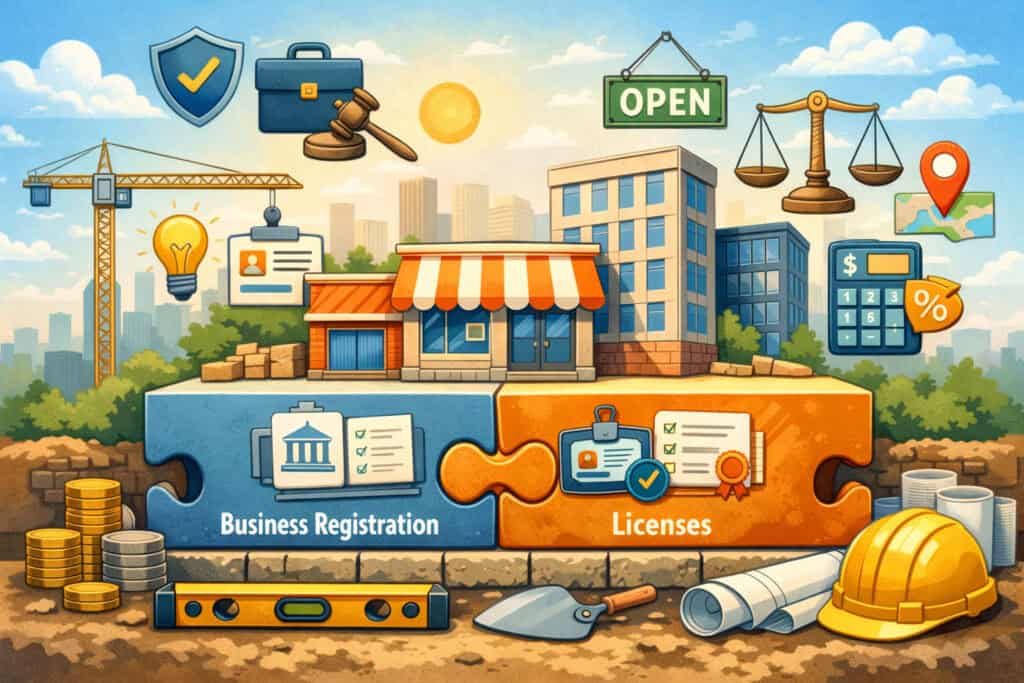
A common mistake is applying for permits before your business is legally formed. Think of automotive business licensing requirements as a ladder:
- Create the entity (LLC, corporation, partnership, sole proprietorship) at the state level
- Register your business name (if using a DBA/trade name)
- Get tax IDs (federal and state)
- Apply for industry licenses and local permits
The Small Business Administration separates “licenses and permits” from “tax ID numbers” because they solve different problems: one authorizes activity, the other tracks taxes.
Even if you’re a one-person shop, you’ll often need:
- A state business registration record
- Local business license approval
- Sales tax registration (if you sell parts, vehicles, or taxable services in your state)
- An EIN if you hire employees or meet certain tax/structure rules
The IRS explains that many businesses need an Employer Identification Number (EIN) for hiring employees, operating certain entity types, or managing specific tax obligations.
Getting the foundation right prevents denial later—because many agencies require your legal business name and tax IDs before issuing trade licenses.
EIN and tax registrations: a core part of automotive business licensing requirements
For most owners, the tax layer of automotive business licensing requirements includes:
Federal EIN (Employer Identification Number)
Even if you don’t have employees yet, an EIN is often needed for:
- opening business bank accounts,
- applying for dealer licenses,
- working with wholesale parts suppliers,
- payroll setup later.
The IRS outlines common situations where an EIN is required and emphasizes that EINs connect to your filing and reporting responsibilities.
State tax ID and sales tax registration
Many automotive companies must register with the state tax authority to:
- collect and remit sales tax on parts (and sometimes labor),
- collect sales tax on vehicle sales (dealer operations),
- manage payroll withholding if you have staff.
The SBA notes federal and state tax IDs are key to paying taxes properly.
Because automotive business licensing requirements are enforced through audits and payment trails, clean tax registration protects you during inspections, dealer audits, and financing relationships.
Local business licenses, zoning, and “use approval” are often the real gatekeepers
In practice, local government is where many projects get stuck. Your city/county may require:
- a general business license,
- zoning approval for “automotive use,”
- signage permits,
- occupancy permits.
Even if you meet every other item on automotive business licensing requirements, you can still be blocked if your location is not approved for automotive work, vehicle storage, tow staging, or paint/booth operations.
Plan for these realities:
- Automotive uses can be restricted in mixed-use zones.
- Outdoor storage of vehicles may be limited or fenced-only.
- Noise, waste, and parking are common neighbor-triggered complaint areas.
- Operating hours may be controlled by zoning conditions.
The fastest path is to confirm zoning and “allowed use” early—before signing a long lease or building out a shop.
Building permits, fire approvals, and inspections you should expect
A shop is not just an office. Many jurisdictions require permits and inspections for:
- lifts and anchoring
- compressed air systems
- electrical upgrades (240V equipment, welders, compressors)
- ventilation systems
- paint booths and mixing rooms
- waste storage areas
- ADA accessibility
- fire suppression equipment and extinguisher placement
These become part of automotive business licensing requirements because many cities will not issue a final business license without a passed inspection or certificate of occupancy.
Automotive repair shop licensing: what most owners actually need
For a standard mechanical repair shop, automotive business licensing requirements commonly include:
- business registration and local business license
- zoning/occupancy approval
- sales tax registration (depends on state and what you sell)
- waste handling setup (used oil, filters, coolant, batteries)
- employee and workplace safety compliance
Industry guides frequently emphasize that licensing differs by state and municipality, and you should build a checklist based on your exact services.
Mobile mechanic licensing requirements
Mobile operations often have extra complexity:
- commercial vehicle registration and insurance,
- permission to operate in certain parking areas,
- disposal and transport rules for fluids and filters,
- city permits if you perform repairs in public spaces.
Mobile service doesn’t eliminate automotive business licensing requirements—it shifts them. You may reduce building permits, but increase transportation, waste transport, and location permissions.
Used car dealer licensing: dealer rules, bonds, and disclosure obligations
If you sell titled vehicles, automotive business licensing requirements typically expand to a dealer licensing regime. Most states require:
- dealer application and fees
- background checks
- a physical location that meets dealer standards
- a dealer bond
- dealer plates
- recordkeeping for titles, odometer statements, and sales contracts
- sales tax registration
The FTC Used Car Rule and the “Buyers Guide”
If you sell used vehicles as a dealer, you must comply with the FTC Used Car Rule. The FTC explains that dealers must post a Buyers Guide on used vehicles offered for sale, including vehicles sold on consignment, and that dealers must display it before a customer inspects a vehicle for buying purposes.
This matters because automotive business licensing requirements are not only “permission to operate.” They also include consumer disclosure duties that can trigger enforcement if you skip them.
Pricing transparency rules are evolving
Beyond the Buyers Guide, pricing and add-on disclosure standards have been under heavy attention. For example, reporting has covered legal challenges and court outcomes affecting federal dealer transparency rules.
Even when a specific federal rule changes, states often enforce their own deceptive practices laws, so compliance should aim higher than the minimum.
Auto body and collision repair: air rules and paint operations you can’t ignore
Collision repair is where automotive business licensing requirements become highly technical. Your permits and compliance may include:
- paint booth approval (fire/building)
- ventilation requirements
- hazardous material storage rules for solvents and coatings
- air emissions compliance
- waste disposal contracts
- worker protection training and documentation
The EPA has an “Auto Body Rule” (National Emission Standards for Hazardous Air Pollutants) that targets certain paint stripping and surface coating operations at area sources. It is intended to help collision repair shops comply with air emissions-related requirements.
Paint booth permits and operational controls
Some locations require permits specifically for spray operations and booth installation. Even when you’re not required to obtain a stand-alone permit, you may still need to meet emission-control practices, filtration, maintenance, and recordkeeping expectations tied to your local environmental authority’s program.
Because paint operations generate complaints (odor, overspray), they are a frequent trigger for inspections—making this a critical part of automotive business licensing requirements for body shops.
Environmental compliance: used oil, fluids, filters, batteries, and spill prevention
Environmental rules are not optional in automotive. In fact, for many shops, environmental compliance is the most “ongoing” component of automotive business licensing requirements.
Used oil management standards
If your shop generates used oil, you should follow used oil management standards and good housekeeping practices. EPA guidance covers storage, spill prevention, and recordkeeping expectations for common generators like service stations and quick lube shops.
Practical expectations often include:
- labeled containers (“Used Oil”)
- closed containers except during transfer
- spill kits and procedures
- documentation of pickups by authorized haulers or recyclers
Don’t forget universal waste and other streams
Depending on your shop, you may handle:
- batteries
- brake cleaners and solvents
- coolant/antifreeze
- oily rags
- aerosol cans
- paint-related wastes
A clean waste program reduces fire risk, prevents groundwater liability, and protects your ability to keep operating if a complaint triggers a site visit.
Towing and transport licensing: when a USDOT number and registrations can apply
Towing and transport services often look “simple” on paper but have layered automotive business licensing requirements depending on how you operate.
If you operate commercial vehicles in interstate commerce (or move certain regulated loads), you may need a USDOT number.
The Federal Motor Carrier Safety Administration explains that companies operating commercial vehicles transporting passengers or hauling cargo in interstate commerce must register and have a USDOT number, with additional requirements for certain hazardous materials carriers.
Beyond that, you may face:
- local permits for tow yards
- signage and fencing requirements
- insurance minimums
- driver qualification rules
- vehicle inspection and maintenance documentation
Treat towing as both an automotive service and a transportation operation—because enforcement can come from multiple directions.
Employee, workplace, and shop safety compliance that ties into licensing
Even when not called a “license,” workplace safety rules act like one—because failing them can result in closures, fines, or insurance denial.
As part of automotive business licensing requirements, build a safety compliance layer that covers:
- lift safety procedures and inspection logs
- hazard communication (chemical labeling and SDS access)
- PPE requirements (eye protection, gloves, respirators where needed)
- ventilation standards for exhaust and chemicals
- lockout/tagout practices for certain equipment
- training records
Safety compliance also improves hiring and retention. Techs prefer shops that look professional and protect them.
Insurance, bonds, and financial compliance that often gate approvals
Many agencies won’t finalize approvals without proof of insurance. And dealer licensing often requires a bond. While insurance and bonds aren’t always “licenses,” they are functionally part of automotive business licensing requirements because you can’t legally operate without them.
Common coverage types:
- general liability
- garage liability
- garage keepers (customer vehicles in your care)
- workers’ comp (if you have staff)
- commercial auto (towing, mobile service)
- property coverage (tools, equipment)
- pollution liability (sometimes recommended for shops with higher exposure)
For dealers:
- dealer surety bonds are frequently required by state dealer programs.
Build insurance early so your applications don’t stall at the finish line.
Consumer protection, advertising rules, and documents you must standardize
A major—and often underestimated—part of automotive business licensing requirements is customer-facing documentation and sales conduct.
Used vehicle disclosures and Buyers Guide compliance
As noted earlier, the FTC requires the Buyers Guide for used vehicles offered for sale by dealers under the Used Car Rule.
Dealers should standardize:
- Buyers Guide printing and display process
- warranty language controls
- “as-is” presentation rules and exceptions (state-specific)
Repair authorizations and invoicing standards
Many states require written estimates and customer authorization before repairs. Even when not required, it’s best practice because it:
- reduces disputes,
- improves payment collection,
- supports chargeback defense if you take cards.
Your operating documents are part of licensing survival: inspectors and investigators often start by reviewing paperwork.
Beneficial ownership reporting and business transparency: what changed recently
Some owners heard they must file beneficial ownership reports and others heard it was paused or changed. This area has been moving.
FinCEN’s BOI page has posted deadline updates and status information, and additional materials explain how the rules apply. There have also been major reported developments about enforcement and revisions affecting who must report.
Because changes can happen, treat this as a “monitoring item” inside your broader automotive business licensing requirements system:
- verify current applicability for your entity type,
- document your decision,
- set a reminder to re-check official guidance.
A practical compliance workflow: how to meet automotive business licensing requirements without chaos
Instead of guessing and redoing applications, use a repeatable workflow:
Step 1 — Map your services and risk areas
List everything you do: repairs, tires, AC refrigerant work, towing, paint, selling vehicles, financing, storage yard. Each line item can add permits.
Step 2 — Confirm location viability before signing long-term
Get written confirmation (email is fine) about allowed use, vehicle storage, paint operations, towing yard rules, and signage limits.
Step 3 — Build your “license stack”
Create a master file (digital + printed) with:
- entity registration documents
- EIN letter / confirmation
- state tax registrations
- local business license
- occupancy approvals
- environmental waste contracts
- insurance certificates
- dealership documentation (if applicable)
The SBA emphasizes that licensing and permits vary based on location and activities, so your stack should be customized and updated.
Step 4 — Set renewal and audit rhythms
Many approvals renew annually or biannually. Build a renewal calendar and store proof of compliance in one place. This turns automotive business licensing requirements from a crisis into a system.
Future predictions: where automotive business licensing requirements are heading
You can’t predict every rule, but you can predict the direction of travel. Over the next few years, many automotive businesses should expect:
More documentation and digital audit trails
Digital invoicing, customer consent records, and cleaner advertising disclosures will become more important—especially for dealers and high-volume repair operations.
Increased environmental enforcement at the local level
Used oil, solvent handling, and paint operations will remain visible targets because of community complaints and spill risk. EPA’s used-oil and auto body compliance materials show continued attention on these areas.
More specialization for EV and advanced driver-assistance systems (ADAS)
EV battery handling, calibration documentation, and technician training will become a larger part of “operational permission,” even if not called a license. Shops that invest early may face fewer future barriers.
Ongoing shifts in business transparency rules
BOI reporting and enforcement have seen changes and legal/news developments. Expect continued updates, especially for small entities and cross-border operations.
A future-proof approach is simple: build a compliance culture that updates quarterly.
FAQs
Q.1: What is the single most important first step?
Answer: The most important first step for automotive business licensing requirements is confirming your business model and location viability. If your zoning doesn’t allow automotive use, outdoor storage, towing yard operations, or paint work, you can lose months and thousands in buildout costs.
Q.2: Do all automotive businesses need a dealer license?
Answer: No. Automotive business licensing requirements depend on what you do. If you sell titled vehicles regularly (especially as a business), you typically need a dealer license. If you only repair vehicles, you usually don’t. But if you sell vehicles alongside repairs, you may cross into dealer rules.
Q.3: Are used car disclosures really enforced?
Answer: Yes—especially if complaints occur. The FTC describes the Used Car Rule and the requirement to display the Buyers Guide on used vehicles offered for sale by dealers. Even if enforcement attention shifts over time, your best protection is to standardize compliance.
Q.4: What environmental rules hit most repair shops?
Answer: Used oil handling is one of the most common. EPA guidance explains used oil management expectations and references the standards in 40 CFR Part 279. Spill prevention, proper storage, and recordkeeping are key.
Q.5: Do towing companies always need a USDOT number?
Answer: Not always. It often depends on vehicle type, weight, and whether you operate in interstate commerce or carry regulated items. FMCSA explains when a USDOT number is required for interstate commercial operations.
Because towing situations vary, confirm based on your specific operation.
Q.6: How often do licenses and permits renew?
Answer: It varies. Many local business licenses renew annually. Dealer licenses often renew annually or biannually depending on the state. Environmental and fire-related approvals may require periodic inspections. Build a renewal schedule so automotive business licensing requirements don’t surprise you.
Conclusion
The real secret to mastering automotive business licensing requirements is accepting that compliance is a living system. You’re not just collecting paperwork—you’re proving, continuously, that your operation is safe, transparent, and responsible.
Start by choosing your business model, confirming location viability, forming your entity properly, and securing tax registrations. Then build your licensing stack: local business approvals, trade-specific permissions, environmental handling processes, insurance/bonding, and customer disclosure systems.
Use official resources for the most current requirements, especially when federal guidance applies—like the SBA’s licensing overview, IRS EIN rules, EPA compliance programs for auto body/used oil, and the FTC’s used vehicle disclosure requirements.
When you treat automotive business licensing requirements as operations infrastructure—not a startup hurdle—you create a business that can scale, survive inspections, win better customers, and expand into new services with confidence.