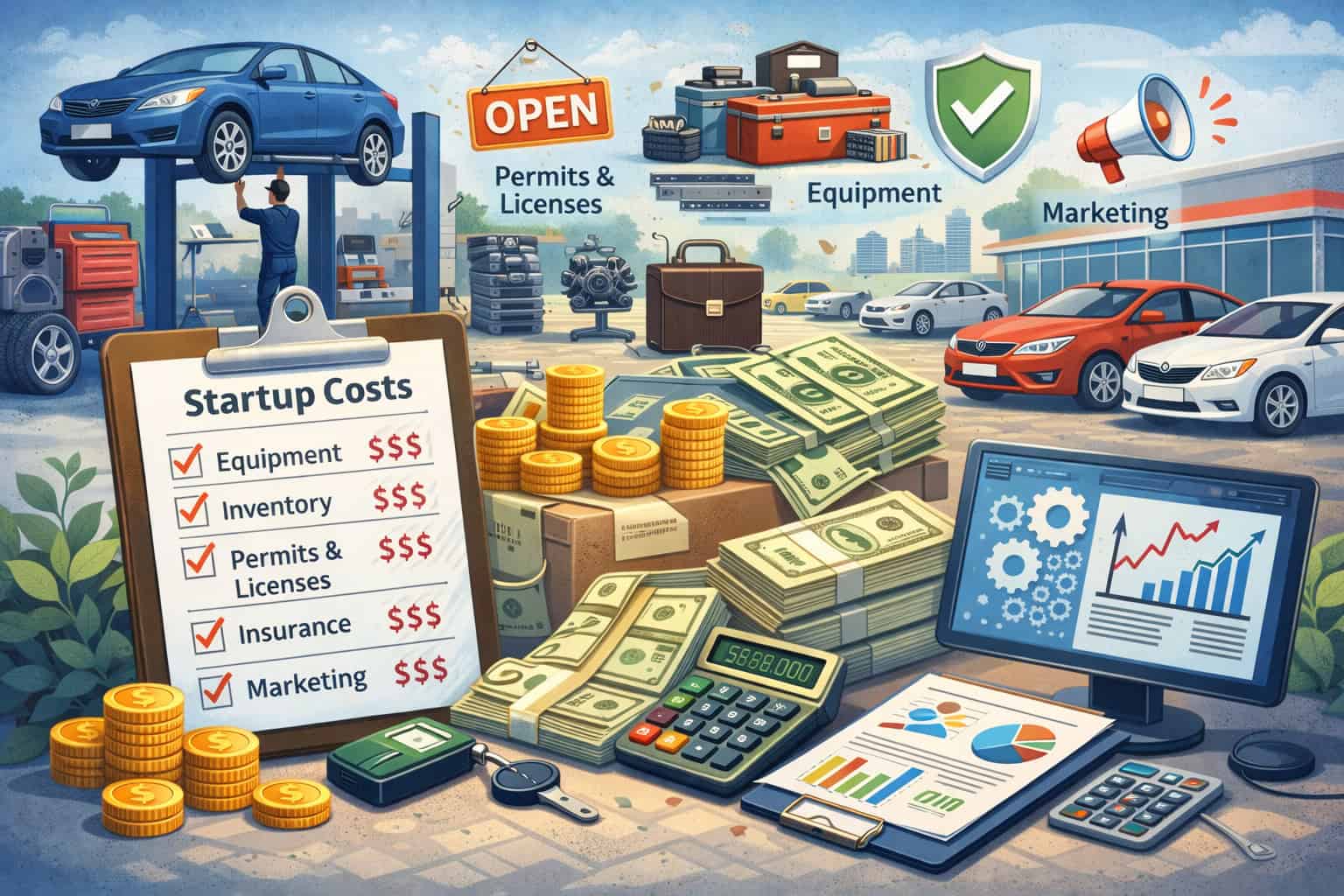
Startup Costs for Automotive Businesses Explained
Starting an automotive venture can be one of the fastest ways to enter a steady, needs-based market—because vehicles keep aging, fleets keep moving, and drivers keep needing service. But profitability depends heavily on planning your startup costs with realistic assumptions and enough working capital to survive the early months.
This guide breaks down startup costs for automotive businesses across common business models, explains what drives those costs up or down, and gives practical budgeting ranges, compliance considerations, and future-facing predictions so you can build a plan that stands up to lenders, investors, and real-world surprises.
To keep this article easy to read, paragraphs are short and focused (similar to what search engines recommend for readability), and each section goes deep enough to help you make decisions—not just understand definitions.
Why startup costs for automotive businesses vary so much

Startup costs for automotive businesses are not “one number.” They swing widely because the industry contains several different models—each with different facility needs, equipment requirements, staffing intensity, inventory exposure, and regulatory overhead.
A two-person mobile mechanic service may start lean with tools and a service vehicle, while a full-service repair facility may require multiple bays, lifts, compressed air systems, alignment equipment, diagnostic subscriptions, and a compliance-ready setup.
A dealership-focused business can face the largest cash needs due to inventory financing, lot requirements, and buyer disclosure rules.
The biggest reason costs vary is asset intensity. The more you must own before you can sell (lifts, alignment racks, scanners, tow trucks, paint booths, tire machines, or vehicle inventory), the higher your startup costs.
The second driver is fixed overhead: a prime location can generate walk-in demand but increases rent, signage, utilities, and build-out costs. Third is labor structure: hiring certified techs early improves throughput but increases payroll pressure.
Fourth is compliance: handling fluids, chemicals, and waste requires safety programs and proper storage/disposal procedures, which affects your startup costs and ongoing operating costs.
For example, employers need hazard communication practices like labeling, safety data sheets, and employee training for hazardous chemicals.
A smart plan starts by selecting the right model, then building a startup budget that matches the real operational needs of that model—rather than copying a generic checklist.
Choosing the right automotive business model and what it means for your startup budget

Before you price tools or sign a lease, choose the business model that fits your risk tolerance and local demand. Each model changes the shape of startup costs for automotive businesses and the time it takes to break even.
Auto repair shop startup costs: the classic bay-based model
A general repair shop typically carries the highest “baseline” facility requirements: lease or purchase of a commercial space, build-out, lifts, air compressor lines, shop equipment, and front-office systems.
Many 2025-oriented breakdowns place small-shop startup investment roughly in the tens of thousands at minimum, with mid-range shops pushing well into six figures depending on bay count, equipment, and location.
This model can scale well, but it demands strong throughput, good technicians, and enough cash to cover rent and payroll during slow weeks.
Mobile mechanic startup costs: the lean, flexible model
Mobile service reduces facility expenses but increases your dependence on a reliable vehicle, fuel, routing, scheduling, and a tight tool/parts strategy.
Many guides note that a mobile operation can start with a relatively low tool investment if you already have a suitable vehicle, though costs rise quickly as you add advanced diagnostics, insurance coverage, and service capability. This is often the best entry point when you want low fixed overhead and faster launch.
Specialty services startup costs: tires, brakes, transmissions, detailing, wrap, ADAS, EV services
Specialty shops can be profitable because they focus marketing, training, and workflow. But some specialties add expensive equipment and compliance needs.
ADAS calibration, alignment, collision paint, and EV high-voltage service can push startup costs higher due to specialized tools, training, and facility requirements. Your budget becomes less about “a shop” and more about “a lab-like workflow.”
Dealership and vehicle sales startup costs: high capital, high compliance, high competition
Selling vehicles can require dealer licensing, bonding, insurance, compliant paperwork, and inventory planning. Dealers must also follow specific buyer disclosure rules for used vehicles (like a Buyers Guide display).
This model can work, but it’s usually the most cash-intensive because inventory financing and marketing costs hit early.
Selecting the model is the first major lever to control startup costs. The second lever is designing your launch scope so you can open with “enough” capability, then expand from cash flow.
The core startup cost categories every automotive business should plan for

When entrepreneurs underestimate startup costs for automotive businesses, it’s often because they focus on obvious purchases (tools, rent) and miss hidden “activation costs” (permits, training, software subscriptions, disposal contracts, deposits, and working capital). A solid plan groups costs into categories so you don’t get blindsided.
One-time setup costs
These include business formation, initial licensing, lease deposits, build-out, signage, initial tool and equipment purchases, initial inventory/parts, computers, point-of-sale systems, security cameras, and grand opening marketing. They also include early professional services like accounting setup and legal review of leases and vendor contracts.
Recurring monthly costs you must survive
These include rent/loan payments, utilities, internet, software subscriptions, insurance premiums, payroll, payroll taxes, waste disposal services, shop supply replenishment, marketing, and any financing payments (equipment leases, working capital lines, inventory financing).
Working capital (your survival fund)
Working capital is the most ignored budget line—and one of the most important. Even if you have customers quickly, you may face delayed payment (commercial accounts), warranty processing delays, chargebacks, returns, parts delivery problems, and seasonal slowdowns.
Most owners need a cash buffer to cover 2–6 months of fixed costs depending on the model and how aggressive their staffing plan is.
The Small Business Administration’s planning guidance emphasizes building a business plan and thinking clearly about startup costs and funding needs as part of launch readiness.
If you treat startup costs as “what it takes to open,” you risk running out of cash right after opening. Treat startup costs as “what it takes to open and operate until consistent cash flow.”
Facility and location costs: rent, build-out, utilities, and the cost of being visible

Facility decisions can make or break startup costs for automotive businesses, because location affects not only rent but also marketing spend, technician recruitment, customer convenience, and average ticket size.
A high-traffic corridor can generate demand, but the startup costs rise through higher deposits, stricter landlord requirements, and more expensive build-outs.
Lease vs. purchase: what really changes your startup costs
Leasing often lowers immediate startup costs but can include significant deposits, required insurance coverages, and tenant improvement responsibilities.
Purchasing requires down payment, inspections, potential environmental checks, and a longer timeline—but can stabilize long-term occupancy costs. If you’re starting your first shop, leasing is commonly the safer launch path because it preserves working capital.
Build-out and shop readiness costs
Automotive spaces are not “generic retail.” Even when the building is already industrial, you may need:
- Electrical upgrades for compressors, lifts, EV chargers, or diagnostic stations
- Air lines, drainage considerations, and fluid handling areas
- Customer waiting space and a front counter that supports sales flow
- Shop lighting that reduces mistakes and improves inspection quality
- Security systems (tools and catalytic converters are theft targets)
These costs are highly local and property-specific, so your best defense is a contractor walk-through before signing the lease and a contingency budget (often 10–15% of build-out).
Utilities and operating readiness
A repair business can have meaningful utility bills because of compressors, HVAC, lighting, and equipment loads. Underbudgeting utilities is a common early mistake. Plan for seasonal spikes and include internet redundancy if scheduling and payments depend on connectivity.
Facility costs are often the largest “fixed overhead” portion of startup costs. If you want to lower startup costs, choose a smaller bay count at launch, limit build-out to essentials, and upgrade once demand is proven.
Equipment and tools: the biggest controllable lever in startup costs for automotive businesses
Equipment spending can spiral fast, especially when new owners buy everything they might “one day” use. The goal is to buy what you need to deliver your initial service menu safely and efficiently, then expand.
Many startup cost breakdowns for repair shops put diagnostic equipment alone in the range of several thousand to tens of thousands depending on sophistication and coverage.
The essential equipment stack (by most repair models)
A typical starting equipment list includes:
- Lifts or jacks/stands (depending on facility vs mobile)
- Air compressor and air tools (for bay-based shops)
- Scan tools/diagnostic platform + subscriptions
- Torque tools, hand tools, electrical testing tools
- Battery/charging system testers
- Brake service tools, fluid service tools
- Shop safety equipment: PPE, spill kits, fire extinguishers
Even if you buy used equipment, you must budget for delivery, installation, inspection, and downtime risk. Used lifts can be a bargain, but a lift failure is catastrophic—so set quality standards.
Specialty equipment: alignment, tires, ADAS, and EV tools
Specialty equipment increases startup costs for automotive businesses, but it can also increase revenue per square foot. Examples:
- Alignment rack and alignment system
- Tire mounting and balancing machines
- ADAS calibration targets and dedicated space
- High-voltage insulated tools and EV safety gear
- Advanced diagnostic scopes and programming tools
The best strategy is to add specialty equipment only when you can reliably sell it. For instance, an alignment rack is powerful if you also market tires and suspension and have lane discipline in workflow. If not, you may be carrying debt for an underused asset.
Buy, lease, or finance?
Leasing preserves cash but adds monthly payments. Buying reduces long-term cost but increases startup cash needs. Financing may be the middle path if rates and terms are reasonable and you maintain strong working capital.
A disciplined equipment plan keeps your startup costs proportional to your go-to-market strategy—and prevents the “tool-rich, cash-poor” trap.
Inventory and parts: how much you really need on day one
Parts and inventory can quietly become one of the largest startup costs for automotive businesses, especially if you stock “just in case” rather than stocking based on the services you’ll actually sell. The right inventory plan is not about having everything—it’s about having the right fast-moving items and reliable supplier relationships.
The smart way to stock for launch
If you’re doing general repair, you’ll use common consumables constantly:
- Fluids (oil types you commonly service, coolant, brake fluid)
- Filters, belts, hoses (selectively)
- Brake pads/rotors for common vehicle types (limited quantity)
- Shop supplies (rags, gloves, cleaners, clamps, fittings)
Many shops keep consumables and fast movers while ordering most job-specific parts daily. This reduces cash tied up in shelves and reduces dead inventory.
Managing parts risk and cash flow
The parts business is full of returns, cores, and warranty claims. You’ll want processes for:
- Core tracking and timely returns
- Warranty documentation and storage
- Quality checks at receiving
- Vendor credits and reconciliation
Mobile businesses often carry fewer parts to stay flexible. Shops may carry more to reduce cycle time. Either way, you need inventory controls from day one so inventory doesn’t become invisible profit loss.
Initial vendor setup costs
Some suppliers require account setup, minimum orders, or deposits. Also budget for delivery fees, shop supply programs, and credit terms. Better terms reduce startup cash needs, but suppliers typically require a history of reliable payment.
A controlled inventory strategy lowers startup costs while keeping service speed high—which directly impacts reviews and repeat business early on.
Licensing, permits, insurance, and compliance: the costs people forget until it’s urgent
Compliance can feel boring until it becomes expensive. For startup costs for automotive businesses, compliance expenses include permits, training, signage, inspections, disposal contracts, safety gear, and sometimes bonding.
The specific requirements vary by state and city, but several federal frameworks commonly apply depending on your operations.
Chemical safety and training (workplace compliance)
If you have employees, you need a hazard communication approach for chemicals used in cleaning, painting, fluids, and aerosols. OSHA’s hazard communication standard centers on a written program, labeling, safety data sheets, and training. Even if you’re small, training and documentation are part of operating responsibly—so plan both time and budget.
Used oil and fluid handling (environmental compliance)
If you generate used oil, you must store and manage it properly. Federal standards for used oil management sit within 40 CFR Part 279, which outlines requirements for used oil handling and related rules.
In practice Fletcher-level terms: you’ll budget for approved containers, labeling, spill prevention basics, and a disposal/recycling pickup relationship. These are not huge costs individually, but they add up and are easy to overlook.
Dealer and sales disclosure compliance (for vehicle sales models)
If your automotive business includes used vehicle sales, you must follow the FTC Used Car Rule requiring a Buyers Guide display with key warranty and disclosure details.
This affects your startup costs through paperwork systems, training, signage, and process design. Additionally, industry rules and enforcement priorities can shift, so staying current matters.
Insurance: a startup cost and an operating cost
Common policies that impact startup costs for automotive businesses include:
- General liability
- Garage liability / garagekeepers (for customer vehicles)
- Workers’ compensation (if you hire)
- Commercial auto (for mobile/fleet vehicles)
- Property insurance (tools, building contents)
- Cyber liability (if you store customer data and take payments)
Insurance is often paid monthly, but some carriers require deposits or down payments, which should be treated as startup costs.
Staffing and payroll: the most expensive “startup cost” that keeps happening
Payroll is not just an operating expense—it’s one of the biggest components of startup costs for automotive businesses because hiring too early can drain cash, while hiring too late can crush customer experience and reviews. The trick is matching staffing to expected car count (or job count), then building a scaling plan.
Your launch team options
Many automotive startups use one of these launch patterns:
- Owner-operator only (slow growth, low payroll)
- Owner + one technician (balanced, scalable)
- Front desk + 1–2 techs (better customer experience, higher fixed cost)
- Specialist-first (alignment/diagnostics/EV focus, premium positioning)
If you operate a repair facility, one strong service writer or advisor can increase revenue per visit by improving inspection presentation, maintenance recommendations, and follow-up. But adding that role too early can create overhead before demand is stable.
Payroll isn’t just wages
Startup costs must also account for:
- Payroll taxes and employer obligations
- Hiring costs, background checks, onboarding time
- Training and certifications
- Uniform programs (often recurring)
- Productivity ramp time (new hires rarely hit full efficiency immediately)
Building a compensation strategy that doesn’t break you
Many shops use a mix of hourly, salary, and productivity incentives. Your compensation model must protect quality. Early-stage businesses sometimes chase speed, but comebacks and warranty rework can destroy margins and reviews.
If you’re optimizing startup costs for automotive businesses, plan staffing in phases and budget a ramp period where payroll is high relative to revenue.
Technology, software, and payment systems: modern essentials that shape your startup costs
Today, technology is not optional. Customers expect online scheduling, text updates, digital inspections, and multiple payment options. This category is often underestimated in startup costs for automotive businesses because it includes “small” subscriptions that stack.
Core software stack
Most businesses need:
- Scheduling and CRM
- Shop management system (estimates, work orders, parts ordering)
- Digital vehicle inspections (DVI) and photo/video storage
- Accounting integration and payroll tools
- Customer communication (texting, email reminders)
- Reputation management (review requests, feedback routing)
A lean startup can start with a simpler stack, but switching systems later can be painful. Choose tools that scale and integrate.
Payments and merchant services
Payment acceptance includes:
- Card readers/terminals
- Online payment links and invoices
- Chargeback management tools
- PCI and security practices
Payment processing is part of customer experience. Clear estimates, documented authorization, and clean invoices reduce disputes and speed up cash flow.
Cyber and data practices
Even small shops store customer information and vehicle history. Basic cybersecurity—unique passwords, secure Wi-Fi, access control, backups—can prevent losses that far exceed the subscription cost.
Technology is a compounding advantage: it reduces missed calls, reduces no-shows, increases conversion, and increases repeat business—so it should be treated as a growth engine, not just a cost.
Marketing and customer acquisition: budgeting to be found and trusted
Marketing is part of startup costs for automotive businesses because your grand opening is not enough. Customers choose auto service based on trust, visibility, and convenience. Without a plan, you’ll either overspend on ads or underspend and stay invisible.
The foundational marketing assets
At launch, you need:
- A fast, mobile-friendly website with service pages
- Local SEO setup (maps listing, service categories, photos, hours)
- Review acquisition process
- Professional signage and consistent branding
- A clear service menu with transparent positioning (not necessarily prices)
Paid channels vs organic growth
Paid ads can bring quick leads, but they can also burn cash if your tracking and follow-up are weak. Organic marketing—local SEO, referrals, fleet partnerships, and community visibility—tends to produce better long-term ROI but takes time.
Building trust early
Your marketing should highlight:
- Certifications and experience
- Warranty policy and inspection process
- Before/after photos
- Clear communication promises (text updates, approvals)
- Financing options if you offer them
A common early mistake is marketing “everything.” A better approach is to market 3–5 core services that match your equipment and skill strengths, then expand.
Marketing isn’t just spending—it’s building a predictable pipeline so your fixed costs don’t eat you alive.
Working capital and cash-flow planning: the part that determines survival
If you want a realistic view of startup costs for automotive businesses, working capital is the centerpiece. Many automotive businesses fail not because they lack demand, but because cash flow timing collapses under payroll, rent, and parts bills.
What working capital must cover
Working capital should cover:
- Monthly fixed overhead for multiple months
- Parts purchases before customer payment clears
- Slow season dips and weather disruptions
- Rework and warranty issues
- Equipment breakdowns and urgent repairs
- Marketing experiments that don’t work immediately
Cash flow timing risks
Even in a consumer-focused shop, cash flow is not always instant. Parts can be purchased today, labor happens this week, but customer payment may happen after approvals, insurance delays, or fleet billing cycles. If you sell to fleets, you may face net terms that require a deeper cash cushion.
Practical buffer planning
Many entrepreneurs aim for 2–6 months of fixed costs in working capital depending on model risk. A mobile business can often run leaner; a high-rent facility or payroll-heavy shop needs more runway.
This is where many “startup budgets” fall apart: they calculate opening day costs but ignore the months after opening day. Treat working capital as a non-negotiable startup cost.
Funding options: matching financing to your automotive startup cost structure
Funding strategy matters because different startup costs should be financed differently. Short-lived expenses (like initial marketing tests) shouldn’t be financed over five years, while long-lived assets (like lifts) can justify equipment financing.
Common funding paths
- Owner savings (fast, simple, highest personal risk)
- Bank loans and SBA-supported lending programs (structured, documentation-heavy)
- Equipment financing/leasing (good for major tools)
- Lines of credit (working capital smoothing)
- Vendor terms (parts accounts)
- Investors/partners (shared risk, shared control)
Dealership financing considerations
Inventory financing (often called floorplan financing) can shape your entire business model if you’re in vehicle sales. You may also face licensing and bonding requirements, plus strict disclosure practices for used vehicles.
Because compliance and cash needs are higher, dealership startups often require tighter underwriting and stronger documentation.
Avoiding “debt-driven fragility”
Debt can accelerate launch, but too much monthly payment can make your business fragile in slow periods. A healthy plan keeps fixed obligations manageable and protects cash for surprises.
The best funding strategy lowers startup costs pressure without forcing you into decisions that hurt service quality.
Cost control strategies that protect quality (not just cut corners)
Reducing startup costs for automotive businesses should never mean sacrificing safety, ethics, or workmanship. The goal is controlled, phased spending that keeps quality high and cash stress low.
Phase your service menu
Start with services that match your core tools and skills, then add new categories once demand is proven. For example:
- Start: brakes, oil service, batteries, basic diagnostics
- Expand: suspension, cooling, drivability, fleet maintenance
- Specialize later: alignment, ADAS, EV services, programming
Buy used equipment selectively
Used equipment can reduce startup costs, but only if inspected and installed correctly. Prioritize reliability for lifts, compressors, and safety-related gear.
Negotiate vendor relationships early
Ask suppliers for:
- Better payment terms after early consistency
- Return policies and warranty handling support
- Delivery schedules that reduce downtime
Create a “no-surprise” operating system
Documented workflows reduce rework:
- Check-in inspection and photos
- Standard estimate templates
- Authorization and communication logs
- Quality control checklist before delivery
This kind of discipline lowers hidden costs like comebacks, refunds, and reputation damage—costs that often exceed what you saved by cutting corners.
Future predictions: what will shape automotive startup costs over the next 3–7 years
Startup costs for automotive businesses will evolve as vehicles become more software-driven and safety systems more complex. You don’t need to predict everything perfectly, but you should build a plan that can adapt.
Diagnostics and subscriptions will matter more
Software-based diagnostics, programming, and tool subscriptions are likely to grow as a percentage of costs. Businesses that plan for recurring software spend and training will outperform those stuck with outdated capability.
ADAS calibration and safe repairs will expand
More vehicles include cameras, radar, and sensors. Even routine repairs can require calibration or verification. This may push more shops to invest in calibration space, targets, and training—or to form partnerships with calibration specialists.
EV and hybrid service will reshape training and equipment
EV adoption increases demand for high-voltage safety practices, insulated tools, and technician training. Shops that add EV capability thoughtfully may create premium positioning, but the startup costs must be justified by local demand.
Consumer protection and disclosure enforcement will keep evolving
Rules and enforcement priorities around vehicle sales disclosures and dealer practices can shift over time, affecting compliance costs for sales-focused automotive businesses.
That means your processes must be auditable and your team must be trained—especially if you sell used vehicles.
Future-proofing doesn’t mean overspending today. It means leaving room in your budget and strategy to upgrade capability as the market demands it.
FAQs
Q.1: What are the most common underestimated startup costs for automotive businesses?
Answer: The most underestimated startup costs are working capital, build-out surprises, insurance deposits, software subscriptions, compliance setup (training, storage, disposal contracts), and early payroll ramp time.
Owners often budget for tools and rent but forget the month-to-month survival funds that keep the business stable until revenue is predictable. Planning for chemical safety documentation and training is another commonly missed area for businesses with employees.
Q.2: Can I start an automotive business with low startup costs?
Answer: Yes, if you choose a lean model like mobile mechanic service, roadside assistance-style offerings, or limited-scope specialty services.
These models reduce facility overhead and can launch faster. However, “low startup costs” should not mean “no working capital.” Even lean businesses need a cash buffer for insurance, repairs, marketing, and slow periods.
Q.3: How much should I budget for tools and diagnostic equipment?
Answer: It depends on your service scope. Some modern cost breakdowns put diagnostic equipment in a range from a few thousand dollars to tens of thousands for advanced systems and broader coverage.
A smart approach is to buy the tools required for your initial service menu, then reinvest profits into expanded diagnostics and specialty equipment.
Q.4: What compliance costs apply if I handle fluids like used oil?
Answer: If you generate used oil, you must store and manage it in line with environmental standards under 40 CFR Part 279, and you’ll typically budget for labeled containers, spill control basics, and pickup/recycling arrangements.
Local rules can add requirements, so your startup plan should include both a compliance checklist and a small recurring compliance budget.
Q.5: If I plan to sell used vehicles, what disclosure rules affect my startup costs?
Answer: If your business model includes selling used vehicles as a dealer, you must comply with the FTC Used Car Rule, including displaying a Buyers Guide that discloses warranty information and key terms.
This affects startup costs through training, paperwork processes, signage, and operational controls—especially as enforcement priorities and industry rules evolve.
Q.6: How do I calculate the right amount of working capital?
Answer: Start by calculating your monthly fixed costs (rent, utilities, insurance, software, minimum loan payments, baseline payroll). Then decide how many months of runway you need based on risk:
- Mobile: often lower fixed cost, but still needs buffer
- Facility-based repair: higher fixed costs, needs more runway
- Sales-heavy models: inventory and compliance risk can require deeper cash planning
Guidance on building a business plan and clarifying startup costs is a helpful anchor when you translate these numbers into a funding request.
Conclusion
Startup costs for automotive businesses are best understood as three layers: what it takes to open, what it takes to operate safely and compliantly, and what it takes to survive until cash flow becomes predictable. Facility decisions and equipment choices often dominate the startup budget, but the true differentiator is working capital and operational discipline.
If you plan for compliance basics (chemical safety training, used oil management, proper disclosures where applicable), invest in the right tools for your initial service menu, and phase your growth intelligently, you can control startup costs without sacrificing quality.
The automotive market will keep evolving—more software, more ADAS, more EV service needs, and continuing scrutiny around transparency in sales practices.
Businesses that treat technology and training as strategic investments, not afterthoughts, will be better positioned to grow. Your best move is to choose a model that matches your risk tolerance, build a realistic startup cost plan, and launch with a scope you can deliver flawlessly—then expand from proven demand.