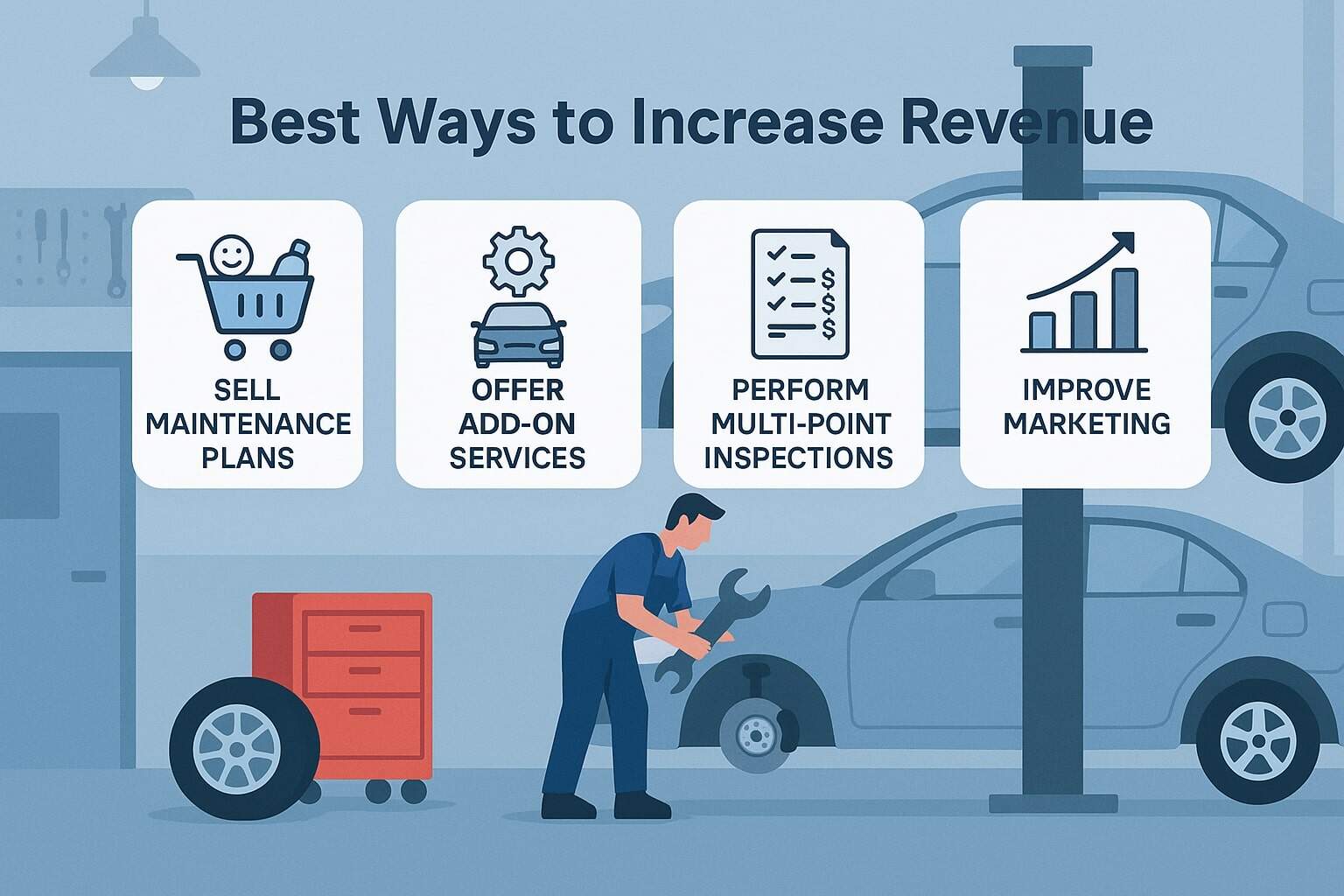
Best Ways to Increase Revenue in Auto Shops
Running a profitable shop today isn’t just about fixing cars—it’s about building predictable car count, improving average repair order (ARO), tightening operations, and selling services in a way customers actually appreciate.
If your goal is to increase revenue in auto shops, you need a plan that improves both front-end demand (more right-fit customers) and back-end capacity (more billed hours, fewer bottlenecks, stronger gross profit).
The market is shifting fast. Vehicles are staying on the road longer, which supports steady repair demand, while technology like ADAS (advanced driver assistance systems), connected-car diagnostics, and EV/hybrid growth is reshaping what customers need and what shops can charge for.
This guide breaks down the best ways to increase revenue in auto shops using modern, customer-friendly strategies. You’ll get practical steps, pricing and packaging ideas, and future-focused predictions you can act on now—without turning your shop into a high-pressure sales floor.
Build a Revenue Strategy Around ARO, Car Count, and Gross Profit
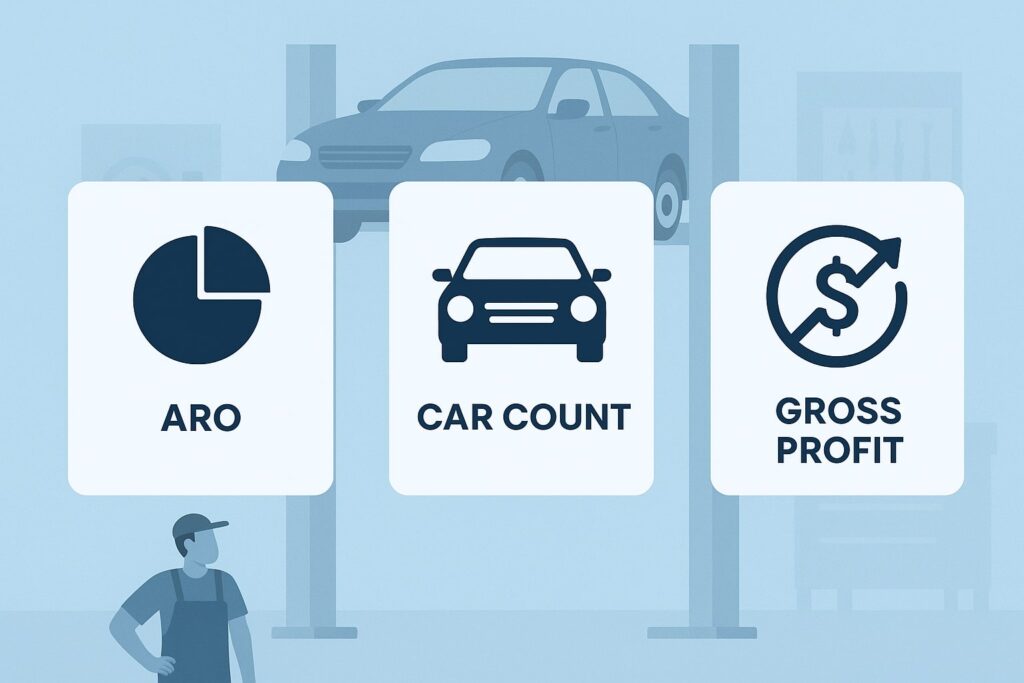
Most shop “revenue problems” are really a math problem with three levers: car count, average repair order, and gross profit per repair order. When you want to increase revenue in auto shops, you’ll grow faster by improving two levers at once instead of obsessing over only one.
Start with a simple weekly dashboard: car count, ARO, labor hours sold, effective labor rate, parts gross profit, and comeback rate. Many shops already know how many cars came in, but don’t track how many labor hours were actually billed vs. available—and that’s where hidden revenue lives.
Industry summaries often point out that labor commonly drives a large share of gross profit, making technician productivity and billed hours critical.
Next, identify your current constraint. If you’re booked out, car count is not your issue—capacity is. If bays are empty, marketing and retention are the priority. A shop that tries to increase everything at once usually increases stress, not revenue.
A practical rule:
- If the schedule is light, focus on demand and conversion.
- If the schedule is packed, focus on workflow, staffing, and higher-value work mix.
- If margins are thin, focus on parts sourcing, labor rate strategy, and fees.
This framework keeps decisions clear and helps every other tactic in this article reliably increase revenue in auto shops instead of creating busywork.
Raise Your Effective Labor Rate Without Scaring Off Customers
A common mistake is thinking “raising labor rate” automatically means losing customers. In reality, the goal is to raise the effective labor rate—what you actually collect—by improving estimating, educating, and matching labor pricing to complexity.
Modern vehicles require more time for diagnosis, research, programming, test drives, scanning, documentation, and calibration. ADAS-related procedures in particular are growing as more vehicles include cameras, radar, and sensors that require precise setup after certain repairs.
To increase revenue in auto shops using labor pricing:
- Separate diagnosis from repair. Stop burying diagnostic time inside a repair line that you may or may not win.
- Price “workflow time” intentionally: scan time, programming time, relearns, calibration setups, post-repair verification.
- Use labor matrix pricing where harder jobs on specific vehicle types carry appropriate rates.
- Write cleaner estimates: a clear story sells quality. Add notes that explain why steps are required for safety and reliability.
- Review discounts: make discounts rare, purposeful, and trackable. Replace blanket discounts with loyalty credits tied to future visits.
Customers don’t mind paying more when they understand what they’re paying for. The win is trust + clarity, which produces higher approvals and fewer disputes—both of which increase revenue in auto shops.
Implement Digital Vehicle Inspections That Customers Actually Read
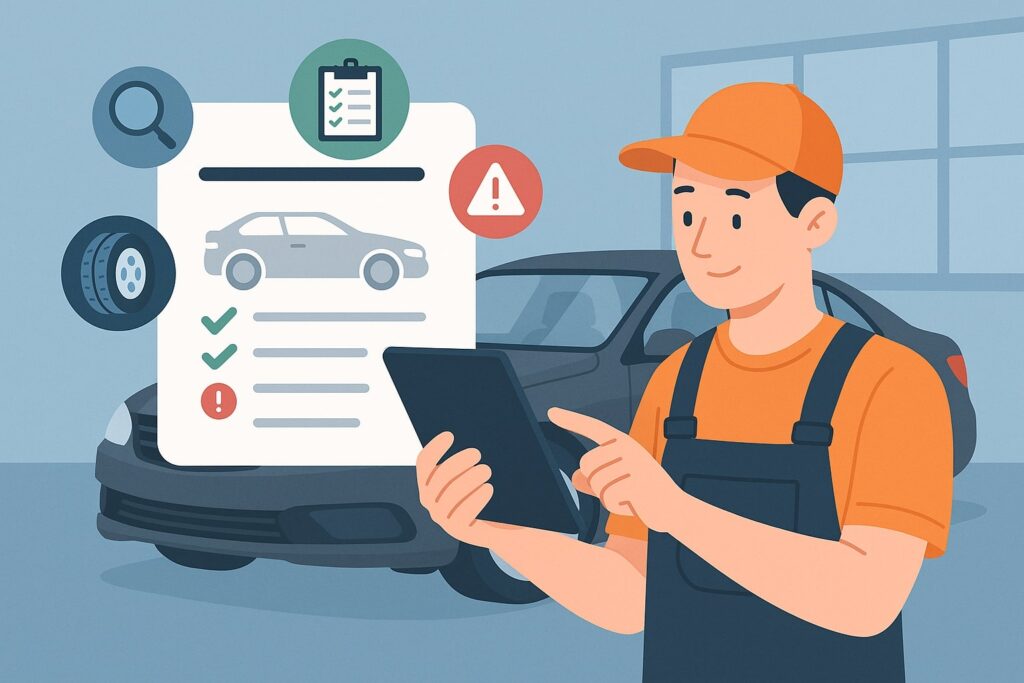
Digital vehicle inspections (DVIs) can be one of the fastest paths to increase revenue in auto shops, but only if done right. The biggest failure mode is dumping 40 photos and a wall of red “urgent” items that feels like fear-selling.
The best DVIs follow a simple structure: safety, reliability, maintenance, and future planning. You’re not just listing problems—you’re presenting a vehicle plan.
Why it works: customers buy confidence. A well-done inspection answers: What’s wrong? What can wait? What will it cost if I delay? Some industry summaries cite sizable lifts in ARO when DVIs are used consistently.
To increase revenue in auto shops with DVIs:
- Require 3 photos per finding: wide context, close-up issue, measurement (tread depth/brake thickness).
- Use simple language: “Front brakes are at 3mm—recommended replacement is 3mm or less.”
- Add one short video for the top safety item. Video sells reality better than words.
- Offer Good / Better / Best options: fix now vs. staged plan.
- Timebox inspections so techs don’t feel punished: build it into workflow and labor strategy.
Future prediction: DVIs will become table stakes as online booking expectations rise and customers demand transparency. Shops that standardize DVIs now will keep approvals high even as competition increases.
Create High-Margin Service Packages Customers Say “Yes” To
Packages are how you simplify decisions, increase ARO, and protect margins—without acting pushy. When you want to increase revenue in auto shops, packaging works because it turns “a list of line items” into “a maintenance solution.”
Strong package rules:
- Bundle services that naturally go together.
- Make packages seasonal and mileage-based.
- Use three tiers with a clear “most popular” option.
- Include a visible value anchor (what it would cost separately).
Examples that often boost revenue:
- Brake Service Package: pads/rotors + brake fluid exchange + caliper service (where appropriate) + post-repair road test notes.
- Cooling System Reliability Package: pressure test + coolant service + hoses inspection + thermostat evaluation notes.
- Ride & Handling Package: alignment check, steering/suspension inspection, tire condition report, and prioritized recommendations.
Make sure packages are built around outcomes: safer braking, smoother ride, fewer breakdowns. That language improves approvals, which directly helps increase revenue in auto shops.
Future prediction: subscription-style maintenance bundles will expand, especially among customers who want predictable monthly costs. Some shops are already testing recurring programs for routine services and perks.
Add ADAS Scanning and Calibration Pathways
ADAS services are quickly becoming a meaningful revenue line. Even if you’re not a collision shop, scanning and calibration needs show up after windshield replacement, suspension work, alignments, steering repairs, battery disconnects on some models, and more.
One industry white paper projects that a large share of collision repairs will require mandated ADAS calibrations by 2025, indicating the direction of demand. Another recent study summary notes many independent shops decline ADAS work due to equipment and training gaps—meaning the shops that invest can capture underserved demand.
How to increase revenue in auto shops with ADAS:
- Standardize pre- and post-scan policies and fees.
- Build a decision tree: static calibration, dynamic calibration, sublet partner, or refer-out.
- Train service advisors to explain ADAS in plain terms: “This confirms the safety systems see correctly.”
- Market it locally: “ADAS scan & calibration available” is a differentiator.
Future prediction: ADAS capability will shift from “premium add-on” to “required competency.” Shops that develop a calibration pathway (in-house or strong sublet partner) will win higher-value repair orders.
Get Serious About EV and Hybrid Services (Without Overhauling Your Shop)
EVs and hybrids are not an all-or-nothing leap. Many shops can start profitably with hybrid maintenance, EV tires, brakes, suspension, thermal management basics, and high-voltage safety training. The point is not to become a battery rebuild center overnight—it’s to stop turning away work that you could safely and legally do.
Industry commentary and data-oriented posts in 2025 note many general repair shops still see low EV share in annual car count, and a meaningful portion don’t service EVs at all—creating a gap for early adopters.
Ways to increase revenue in auto shops with EV/hybrid readiness:
- Invest in high-voltage safety training and shop procedures first.
- Stock common EV-adjacent items: tires, cabin filters, wiper systems, suspension components.
- Add coolant service capability that matches modern thermal systems.
- Promote “EV & Hybrid Maintenance Checks” as an inspection product.
Future prediction: EV maintenance differs (often fewer engine-related services), but EV weight and torque can increase tire wear and suspension needs. Shops that position around inspections, tires, alignments, and safety-system workflows can still increase revenue in auto shops as the fleet mix changes.
Improve Bay Productivity and Workflow to Sell More Hours
If you’re busy but not profitable, you likely have workflow leakage: waiting for approvals, waiting for parts, unclear dispatching, or techs doing non-tech tasks.
To increase revenue in auto shops, you must convert available hours into billed hours:
- Use a dispatcher role (even part-time) to keep bays flowing.
- Stage vehicles: keys, RO, parts, and job plan ready before pulling in.
- Standardize your “approval loop” with DVIs and text authorization.
- Create two daily touchpoints: morning plan + mid-day recalibration.
- Offload errands: tech time should be wrench time.
Industry summaries often highlight how bay utilization and billed-hour performance separate top shops from average ones.
Future prediction: technician shortages will continue to pressure capacity, so the best revenue growth will come from doing the same car count with more billed hours and fewer delays, not just trying to hire your way out.
Build a Retention Engine: Follow-Ups, Reminders, and Re-Activation
Acquiring a new customer is expensive. Retention is where profit lives. A shop that improves return visits will reliably increase revenue in auto shops even if marketing spend stays flat.
Retention system essentials:
- Send a same-day thank-you text with a link to review.
- Set service reminders based on mileage/time (oil, tires, brakes, alignments).
- Re-activate lapsed customers at 6, 9, and 12 months with a simple message: “Want us to take a quick look before your next trip?”
- Keep inspection history so returning customers feel continuity and trust.
A huge driver of retention is experience: clear estimates, on-time updates, and no surprises. Online reviews matter because most customers check them before choosing a shop, and review momentum boosts local visibility.
Future prediction: automated messaging and online booking expectations will rise. Shops that make car care feel easy will outgrow those that rely on walk-ins and phone-only scheduling.
Increase Revenue Through Local Visibility and Reputation Marketing
If your shop is not consistently showing up when people search “brakes near me” or “check engine light,” you’re losing high-intent customers every day. Local marketing is one of the most controllable ways to increase revenue in auto shops.
Focus on:
- A fully built-out business profile: correct categories, services, hours, photos, and Q&A.
- Service pages on your site for your best-margin work (brakes, suspension, diagnostics, AC, ADAS scans, alignments).
- Review requests that are systematic, not random.
- Before-and-after content: short posts and photos build trust.
Your goal isn’t “more traffic.” It’s more right traffic: customers who value quality and approve work. Pair marketing with a strong front desk process, and you’ll increase conversions and ARO.
Future prediction: search results will keep favoring businesses with consistent updates, service clarity, and strong customer sentiment. That makes reputation operations—how you earn and respond to reviews—a revenue activity, not a side task.
Stop Bleeding Margin: Parts Strategy, Shop Supplies, and Fees
Revenue growth without margin is just more work. To truly increase revenue in auto shops, protect gross profit with clear policies.
Key levers:
- Maintain target parts GP by category (maintenance vs. diagnostics vs. specialty).
- Use multiple sourcing options to reduce delays, but avoid chaos—standardize preferred vendors.
- Charge properly for shop supplies and disposal, with transparent line items.
- Include fees tied to real cost: scanning, programming research time, sublet coordination.
Rising complexity and parts proliferation increase overhead and inventory risk, so your pricing must reflect reality. Some industry summaries describe inflationary pressures and rising costs in repair operations and parts handling, reinforcing why fee strategy matters.
Future prediction: as vehicles become more software-driven, “non-wrench” time (research, calibration setup, documentation) will grow. Shops that don’t price for it will fall behind even with a strong car count.
Develop Fleet and Commercial Accounts the Right Way
Fleet work can stabilize demand, but it can also crush margins if you accept the wrong terms. Done correctly, fleets can significantly increase revenue in auto shops through consistent volume and predictable scheduling.
How to do it right:
- Choose niches: light-duty delivery, service vans, small contractors, local property maintenance, municipal subcontracts (where feasible).
- Set clear pricing: labor rate, parts policy, approval thresholds, payment terms.
- Create a fleet workflow: faster check-in, standardized inspections, prioritized “back-to-service” repairs.
- Offer reporting: basic maintenance history and recommendations.
Your leverage is uptime. Fleets don’t want the cheapest shop—they want a shop that keeps vehicles working and communicates clearly.
Future prediction: telematics and predictive maintenance adoption will continue to expand in commercial operations, creating opportunities for shops that can interpret inspection data and plan repairs proactively.
Train Advisors to Sell Ethically and Increase Close Rate
The easiest way to increase revenue in auto shops without adding bays is to improve estimated approval rates. That’s a people-and-process skill.
Ethical selling is simply: diagnosing accurately, documenting clearly, offering options, and letting the customer choose with confidence.
Advisor playbook:
- Lead with the customer’s goal (“reliable commuting,” “road trip ready,” “quiet brakes”).
- Use DVIs to show evidence, not opinions.
- Present a prioritized plan: today, soon, later.
- Offer financing options where available (without pressure).
- Confirm next steps at pickup: “Here’s what we handled, and here’s what we’ll watch on our next visit.”
Future prediction: as trust becomes a bigger differentiator, the shops that communicate best—not the ones that “discount best”—will win the highest-lifetime-value customers.
FAQs
Q.1: What is the fastest way to increase revenue in auto shops?
Answer: The fastest way is usually a combination of consistent DVIs + better estimate presentation + packaged services. DVIs improve trust and approvals, packages make decisions easier, and clearer notes reduce pushback. Many shops see ARO lift when DVIs are implemented consistently and presented in a customer-friendly way.
Q.2: Should I raise my labor rate to increase auto shop revenue?
Answer: Raising posted labor rate can help, but the bigger win is improving your effective labor rate by charging appropriately for diagnostic time, scanning, programming, research, and verification.
As ADAS and software-driven procedures increase, shops that price these steps correctly will be positioned to grow without burnout.
Q.3: Are ADAS services worth offering for a general repair shop?
Answer: Yes—at minimum, having a strong scanning policy and a calibration pathway (in-house or sublet) can protect revenue and reduce liability exposure. Demand for ADAS-related procedures is trending upward as vehicles add more safety tech, and some forecasts show a growing share of repairs requiring calibration steps.
Q.4: How can a shop increase revenue without adding more technicians?
Answer: Focus on workflow and productivity: reduce approval delays, stage jobs properly, assign dispatching responsibility, and keep techs doing tech work. Growing billed hours per day is often more attainable than hiring in a tight labor market.
Q.5: Will EVs reduce repair shop revenue in the future?
Answer: EVs shift revenue mix rather than eliminate opportunity. While some maintenance categories change, shops can grow through tires, alignments, suspension, inspections, thermal system service, and ADAS workflows.
Data and industry commentary indicate many shops still see low EV share today, which means early adopters can build capability and capture demand as it grows.
Conclusion
To increase revenue in auto shops, don’t chase a single magic tactic. Build a system: measure the right numbers, raise effective labor rate with clear documentation, standardize DVIs that customers trust, and package high-margin services around outcomes.
Then protect capacity by tightening workflow and protecting gross profit with disciplined parts and fee strategies.
The next few years will reward shops that embrace modern realities—ADAS scanning and calibration pathways, EV/hybrid readiness, and digital convenience—while doubling down on timeless fundamentals: great communication, clean estimating, and consistent follow-through.