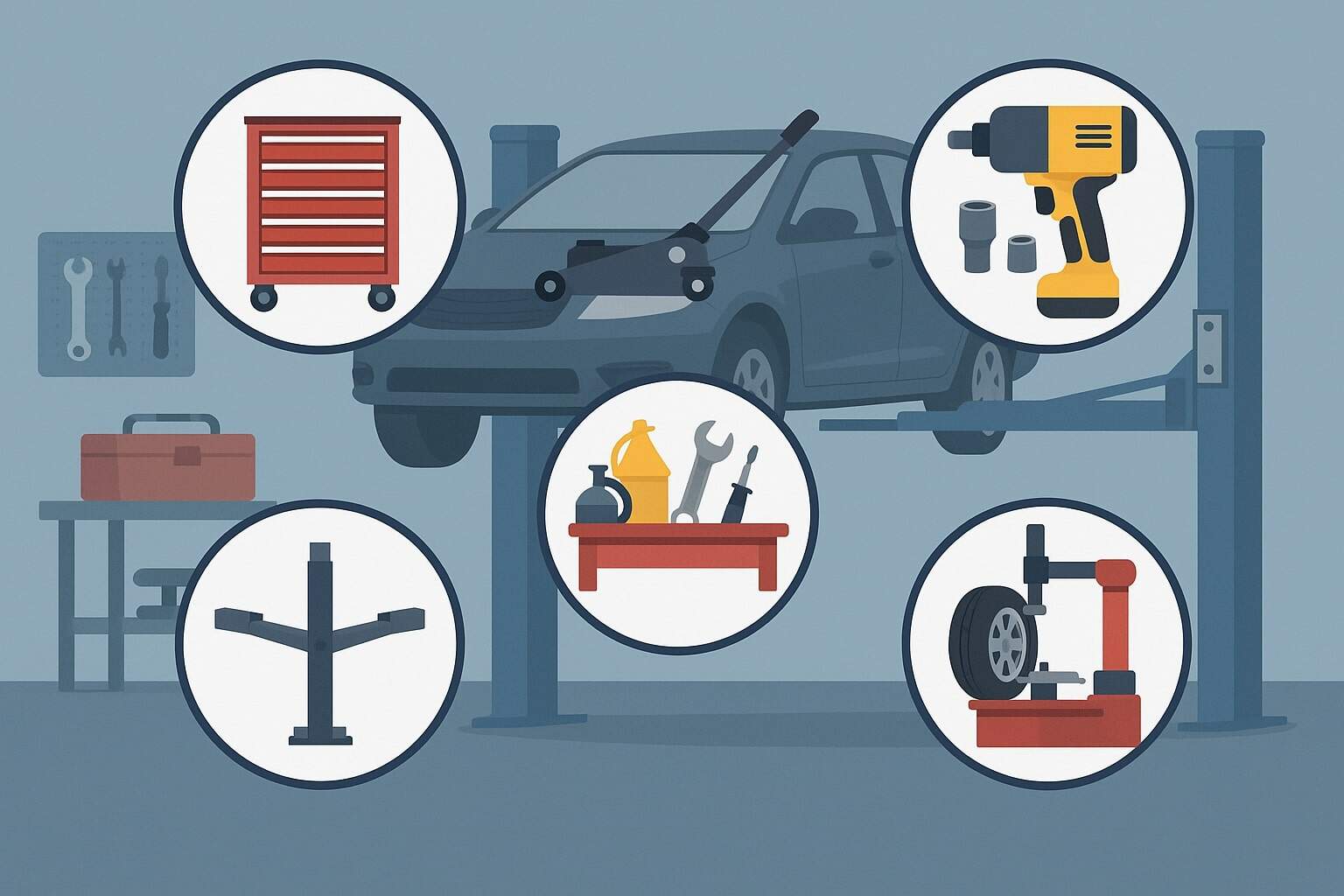
Must-Have Tools for Every Auto Repair Shop
Running a successful auto repair shop isn’t just about having skilled technicians. It’s equally about having the right tools: accurate, durable, safe, and efficient. The right auto repair shop tools help you diagnose faster, fix correctly the first time, reduce comebacks, and improve profit per bay.
Below is an in-depth, up-to-date guide to must-have tools for every auto repair shop, including core hand tools, diagnostic equipment, lifts, alignment systems, EV and hybrid tools, and more. You’ll also see where the industry is heading so you can invest with the future in mind.
The Role of Tools in a Modern Auto Repair Shop

In a modern auto repair shop, tools are no longer just wrenches and jacks. Shops now rely on a mix of mechanical, electronic, and digital tools to handle everything from tire rotations to high-voltage EV diagnostics. Your tool strategy directly affects your reputation, technician safety, and customer satisfaction.
First, quality tools reduce the time needed per job. When a technician has the correct auto repair shop tools at arm’s reach—impact wrenches, torque wrenches, scanners—they can move vehicles through the bay more quickly.
That means higher billable hours per day and better utilization of your lifts. Poor-quality tools slow everything down through broken sockets, inaccurate readings, and repeated adjustments.
Second, tooling affects the range of services you can offer. If you invest in advanced diagnostic scanners, ADAS calibration equipment, and hybrid/EV safety tools, your auto repair shop can attract late-model vehicles and higher-value repair jobs.
Without these must-have tools, you risk turning away work, especially as vehicles become more software-driven.
Third, tools are essential for safety and compliance. Correct personal protective equipment (PPE), vehicle lifts that meet ALI standards, and proper jack stands reduce risk of injuries and liability. Shops that ignore safety gear and inspection tools may see more workers comp claims and regulatory scrutiny.
Looking ahead, auto repair shop tools will become more connected and data-driven. You’ll see more cloud-connected scanners, AI-assisted diagnostics, and integrated shop management systems that talk directly to diagnostic tools.
Planning your purchases with compatibility and software support in mind will help future-proof your shop.
Essential Hand Tools: The Backbone of Every Auto Repair Shop
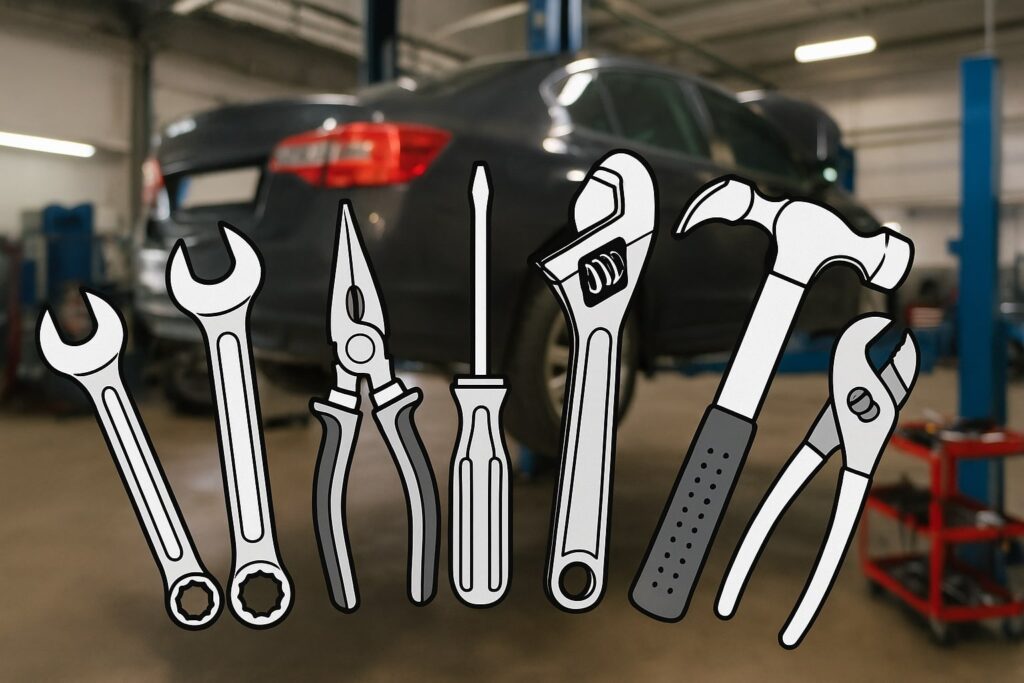
Even in a highly digital world, hand tools remain the backbone of every auto repair shop. They are used in almost every task, from basic inspections to full engine overhauls. Investing in professional-grade hand tools improves precision, reduces fatigue, and protects fasteners and components from damage.
At a minimum, every shop should stock complete socket and ratchet sets (metric and SAE), including deep and shallow sockets, 1/4″, 3/8″, and 1/2″ drive.
High-tooth-count ratchets (72-tooth or more) allow work in tight spaces common in modern engine bays. Combination wrenches, flare nut wrenches for brake and AC lines, and adjustable wrenches are required for everyday jobs.
Screwdrivers and bit sets are another must-have category of auto repair shop tools. Include Phillips, flat, Torx, Pozidriv, and hex bits in various sizes.
Many late-model vehicles rely heavily on Torx fasteners, especially in interior and trim work, so a comprehensive Torx set is non-negotiable. Stubby, long, and offset screwdrivers help techs work around obstructions.
Pliers and cutting tools also play a huge role. Stock needle-nose pliers, locking pliers, slip-joint pliers, hose clamp pliers, and wire cutters. For electrical repairs, you’ll need proper wire strippers, crimpers, and ratcheting crimp tools to avoid intermittent electrical issues caused by poor connections.
Future-focused shops are also investing in ergonomic hand tools that reduce strain. Tools with cushioned, chemical-resistant handles and anti-slip grips help technicians work longer without fatigue.
Over time, investing in higher-quality hand tools with lifetime warranties costs less than frequently replacing broken, cheap tools and dealing with lost productivity.
Power Tools and Air Tools: Boosting Productivity in the Auto Repair Shop
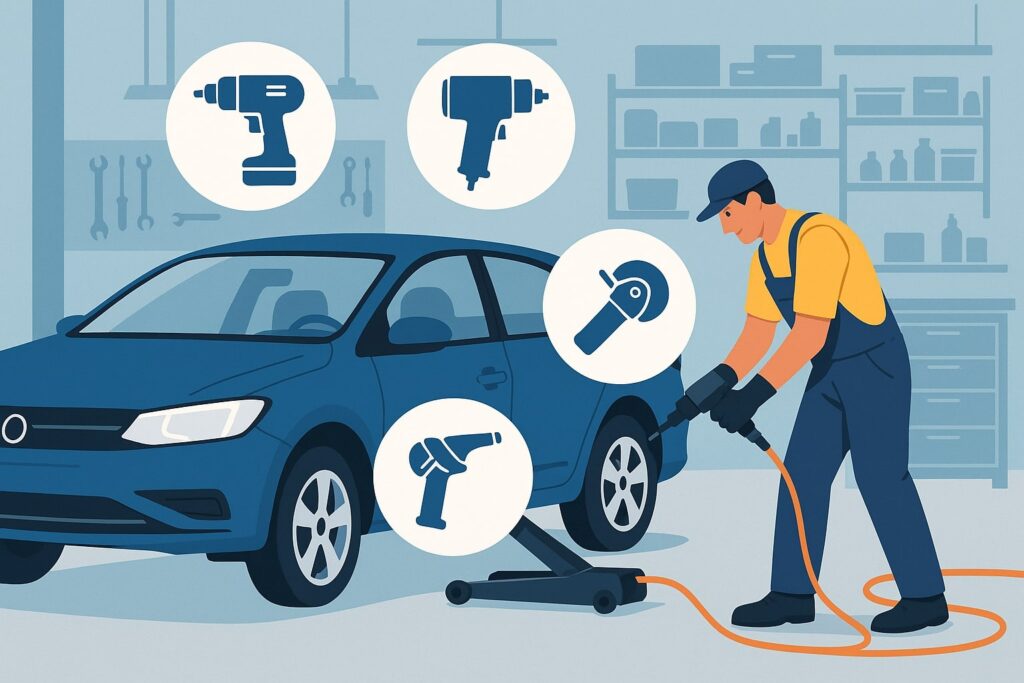
Power tools and air tools dramatically increase the productivity of an auto repair shop. They speed up repetitive tasks like removing lug nuts, suspension bolts, and rusted fasteners, allowing technicians to complete more jobs per day without sacrificing quality.
The cornerstone air tool in many shops is the impact wrench. Corded, pneumatic, and cordless options exist, but cordless battery-powered impact wrenches are gaining popularity due to their portability and improving torque specs.
A 1/2″ drive impact with high breakaway torque can tackle stubborn suspension components, while smaller 3/8″ impact wrenches are perfect for under-hood work.
You’ll also want impact sockets rated for power tool use, plus air ratchets or cordless ratchets to speed up disassembly and reassembly. Die grinders and cutoff wheels handle rusted exhaust components or bodywork, while pneumatic hammers help with ball joints, stuck rotors, and suspension parts.
For body and paint work, air sanders and polishers are must-have auto repair shop tools. They allow quick surface preparation and finishing, improving both speed and finish quality on collision repairs and detailing services. HVLP spray guns may also be needed if your shop handles paint refinishing.
The trend is moving strongly toward cordless tools with shared battery platforms. Choosing a single brand for most cordless tools simplifies charging, reduces downtime, and allows you to share batteries across drills, impacts, lights, and more.
Over time, battery technology will continue improving, with longer runtimes, faster charging, and smarter thermal management.
While air compressors are still important, especially for existing pneumatic tool inventories, many shops are reducing air dependence. Future auto repair shop tools will likely be dominated by cordless platforms, so consider that direction when planning long-term investments.
Diagnostic Scan Tools and OBD-II Equipment: The Brain of the Auto Repair Shop
Modern vehicles are packed with computers, sensors, and software. That makes diagnostic scan tools and OBD-II equipment some of the most important auto repair shop tools you can own. Without proper diagnostics, you risk parts-swapping, misdiagnosis, and low customer trust.
At minimum, every bay should have access to a professional OBD-II scanner capable of reading and clearing codes, viewing live data, and performing basic functions like readiness monitors and freeze frame analysis.
Entry-level code readers are no longer enough for a professional shop; you need bidirectional control, module communication tests, and access to enhanced manufacturer-specific codes.
Higher-end automotive scan tools offer advanced features like actuator tests, coding and programming, key programming, and ADAS calibration support. They may also integrate with online repair databases, wiring diagrams, and guided diagnostics. Your technicians can follow step-by-step test plans instead of guessing, improving first-time fix rates.
Because vehicles are updated regularly, your scan tool must have ongoing software support. Subscription-based updates ensure you can work on late-model vehicles, EVs, hybrids, and new driver assistance systems.
When evaluating tools, pay attention to the update policy, coverage for domestic and import brands, and the availability of tech support and training.
Cloud-connected scan tools are an emerging trend in auto repair shop tools. They can upload diagnostic data, link to service history, and share information with OEM portals or third-party platforms.
In the near future, you can expect more AI-assisted diagnostics where scan tools suggest likely root causes based on symptom and code patterns across millions of vehicles.
Investing in at least one high-end diagnostic platform plus several mid-level scanners for daily use is a smart strategy. This mix keeps your bays moving while giving you the advanced capabilities needed for complex drivability, network, and electronics issues.
Vehicle Lifts and Jacking Equipment: Safety and Efficiency at the Core
Vehicle lifts are among the most critical auto repair shop tools for both safety and workflow. They create easy access to undercarriage components, reduce technician strain, and allow you to fully inspect vehicles during each visit. Selecting the right lifts can make or break your shop layout and capacity.
Common lift types include two-post lifts, four-post lifts, scissor lifts, and in-ground lifts. Two-post lifts are popular for general service because they provide full wheel and underbody access, ideal for suspension, drivetrain, and exhaust work.
Four-post lifts are excellent for alignments and storage, as they support the vehicle by the wheels and often come with alignment turn plates and rolling jacks.
Capacity is extremely important. Many modern vehicles, especially trucks and SUVs, are heavier than older models. Make sure your lifts have appropriate weight ratings for your typical customers, and consider one or more heavy-duty lifts if you service large trucks or fleet vehicles.
In addition to full lifts, every auto repair shop needs floor jacks and jack stands. Choose low-profile jacks that can reach under sport sedans and hybrid battery packs, and always pair them with appropriately rated jack stands. Never rely solely on a jack for long-term support; safety procedures must be standard practice.
Future-oriented shops are looking at smart lifts with integrated safety sensors, automatic lock systems, and digital control panels. Some premium lifts can integrate with shop management systems to record vehicle lift time for billing and efficiency tracking.
While these technologies are still emerging, planning for electrical and data connections around your bays can make future upgrades easier.
Regular lift inspection and certification are also critical. Partnering with ALI-certified inspectors and maintaining logs shows that your auto repair shop takes safety seriously, reassuring both technicians and customers.
Wheel and Tire Service Tools: Keeping Vehicles Safe and Profitable
Tires and wheels are high-volume, high-margin services for many auto repair shops, so having the right wheel and tire tools is essential. Proper tire equipment improves safety, reduces comebacks, and protects expensive customer wheels from damage.
Every shop that touches tires should have a professional tire changer. Look for models that handle low-profile tires, run-flat tires, and large diameter wheels commonly found on trucks and SUVs. Features such as helper arms, bead press systems, and adjustable clamping tables are must-have tire tools that reduce damage risk and technician strain.
A wheel balancer is equally important. Dynamic and road-force balancing options help eliminate vibrations, improve ride quality, and reduce tire wear. Road-force balancers apply a load roller to simulate on-road conditions, identifying issues like out-of-round tires or bent wheels more accurately.
For everyday tire service, you’ll need torque sticks, impact sockets, valve stem tools, TPMS tools, and tire pressure gauges. TPMS (Tire Pressure Monitoring System) service tools allow you to program, relearn, and diagnose sensor issues on modern vehicles. Because TPMS is standard equipment, having robust TPMS tools is no longer optional.
As vehicles evolve, wheel and tire tools will need to accommodate larger wheels, more complex alloys, and integrated sensors.
Expect to see more tire equipment with automatic modes, touchless mounting heads, and improved protection for painted or machined wheel surfaces. Shops that invest in up-to-date wheel and tire solutions will stand out for quality and care.
Alignments are often paired with tire services, so tying your wheel and tire tools into your alignment system and shop management software can streamline upsells and maintenance recommendations for every vehicle.
Alignment Tools and Suspension Service Equipment
Proper alignment is critical for handling, tire wear, and safety. That makes alignment tools and suspension service equipment key auto repair shop tools, especially for shops that want to offer complete undercar services.
A four-wheel alignment machine with high-resolution cameras or sensors is the centerpiece of alignment service. Modern systems include 3D imaging, quick compensation routines, and robust vehicle specifications databases.
They guide the technician through toe, camber, caster, and thrust angle adjustments, often with color-coded graphics for easy understanding.
Your bay will also need alignment racks, turn plates, and slip plates. Many four-post lifts are alignment-ready or can be upgraded with these accessories. Rolling jacks on the rack make it easier to lift wheels off the runways for adjustments and suspension work.
Suspension service requires its own set of must-have tools: ball joint presses, spring compressors, tie-rod tools, bushing tools, and pullers. A high-quality strut spring compressor improves safety when dealing with compressed coil springs, which can be dangerous if handled improperly.
In the near future, alignment tools will increasingly integrate with ADAS (Advanced Driver Assistance Systems) calibration. Many camera-based safety systems rely on correct alignment angles to function properly.
Alignment machines may incorporate targets and procedures for re-aiming cameras and sensors after suspension or collision repair.
Shops that invest early in advanced alignment and suspension tools will differentiate themselves and capture more revenue from tire, steering, and safety-related services. For an auto repair shop, this category of tools is a long-term profit center.
Engine and Drivetrain Service Tools: Precision for Complex Repairs
Engine and drivetrain repairs require some of the most specialized auto repair shop tools. These tools support precision work on timing systems, fuel systems, transmissions, and other high-value components. Without them, you’re limited to basic maintenance, missing out on more profitable repairs.
Common engine service tools include compression testers, leak-down testers, and vacuum gauges. These help you evaluate engine health before recommending major work. Cylinder borescopes are increasingly common, allowing visual inspection of cylinder walls, valves, and pistons without full disassembly.
Many engines require specialty timing tools to lock camshafts and crankshafts during belt or chain replacement. Generic methods can easily cause misalignment and engine damage, so having manufacturer-specific or universal timing kits is essential.
The same applies to direct-injection fuel system tools, such as pullers for injectors and high-pressure fuel line wrenches.
For drivetrains, you’ll need transmission jacks, clutch alignment tools, axle nut sockets, and differential service tools. Transmission flush machines and fluid exchange equipment can be valuable for offering maintenance services that many drivers neglect but desperately need.
Future trends in this category revolve around turbocharged and electrified powertrains. Turbo engines may require special tools for wastegate and turbo service, while plug-in hybrids and range extenders demand new procedures.
Having an evolving collection of engine and drivetrain tools, plus access to updated service information, helps your auto repair shop stay competitive with dealerships.
Because these jobs are high liability, accurate measuring and torque application are critical. Combining these specialty tools with top-tier torque wrenches and digital measuring tools ensures repairs meet OEM specifications.
Electrical and Battery Testing Equipment: Critical for Modern Vehicles
Electrical issues are among the most common and challenging problems in any auto repair shop. Modern vehicles rely on complex networks, modules, and sensors, so robust electrical and battery testing equipment is absolutely essential.
At a basic level, you need digital multimeters (DMMs) with automotive-friendly features: min/max recording, duty cycle, frequency, and temperature. Clamp meters allow non-intrusive current measurements, which are valuable when diagnosing parasitic draws and charging system issues.
Battery and charging system tools are another category of must-have auto repair shop tools. High-quality battery testers can quickly evaluate battery health, reserve capacity, and cold-cranking performance. Many testers also check starters and alternators under load, giving you a complete picture of the vehicle’s power system.
For network diagnostics, you’ll use scan tools but also benefit from lab scopes (oscilloscopes) for deeper analysis. A multi-channel scope lets you view sensor waveforms, ignition patterns, and CAN bus signals, helping pinpoint intermittent issues that basic meters can’t catch.
As vehicles adopt more advanced features and electrification, high-voltage battery analyzers and insulated test tools become increasingly important.
Hybrid and EV systems operate at voltages that can be lethal without the proper equipment and procedures. Insulated hand tools, high-voltage PPE, and specialized test instruments are critical when servicing these systems.
Future electrical tools will likely integrate with cloud platforms and AI diagnostics. For example, scopes and meters may automatically upload captures and suggest likely root causes based on known good patterns.
Shops that build strong electrical diagnostic capabilities will be positioned as specialists in a fast-growing segment of the repair market.
Specialized Tools for EVs and Hybrids: Preparing for the Future
Electric and hybrid vehicles are no longer niche. Every forward-thinking auto repair shop needs a plan—and tools—to service these platforms safely. Investing in EV and hybrid specialized tools today positions your shop for future growth as adoption continues to rise.
The first category is safety equipment. High-voltage gloves, face shields, insulated mats, and lockout/tagout devices are must-have auto repair shop tools for any facility that opens EV battery packs or accesses high-voltage components. These items protect your technicians from electrical shock and arc flash incidents.
Next, you’ll need insulated hand tools, including wrenches, screwdrivers, pliers, and cutters rated for high voltage work. EVs also require specialized lifting and support tools when removing battery packs, such as low-profile battery lifts and dedicated support fixtures.
Diagnostic tools for EVs differ from traditional combustion platforms. You’ll use OEM-level or aftermarket scan tools with robust coverage for EV systems: battery management, inverter, DC-DC converters, and electric drive motors.
Thermal management systems need attention as well, so specialized purging and refilling equipment may be required for EV cooling circuits.
EV-specific testers and analyzers can evaluate battery cell health, insulation resistance, and high-voltage system integrity. Over time, these tools will become as common as compression testers once were for gasoline engines.
Early adoption will give your shop credibility with EV owners, who are often concerned about finding qualified independent repairers.
Looking forward, expect more standardization in EV diagnostic connectors and protocols, plus more remote diagnostics and over-the-air software updates. Your EV tools will need to stay current through software updates and training.
Auto repair shops that invest in EV tools now will be well-positioned as EV volumes increase and these vehicles age out of warranty.
Shop Equipment and Organization: Workbenches, Carts, and Storage
Beyond the obvious auto repair shop tools like lifts and scanners, the “invisible” tools—organization and storage—have a massive impact on efficiency. Well-organized shops reduce wasted time, lost tools, and clutter, creating a safer and more professional environment.
Start with heavy-duty workbenches. These should include durable tops (steel or thick wood), integrated vises, and enough space for parts, tools, and laptops. Adding power strips and USB outlets to workbenches supports laptop-based diagnostics and charging of cordless tools and devices.
Tool storage and carts are another must-have category of auto repair shop tools. Rolling tool carts let technicians bring frequently used tools right to the vehicle, reducing walking back and forth.
Top chests and roll cabinets keep tools secure and organized by system: engine, electrical, suspension, etc. Drawer organizers prevent tools from becoming a jumbled mess.
Parts organization is equally important. Use shelving, bins, and labeled storage for filters, fluids, hardware, and specialty components. A well-organized parts area makes it easy to track inventory, avoid duplicate orders, and quickly pull items for each repair. Some shops integrate barcode or RFID systems to track high-value tools and parts.
Lighting, fans, and climate control contribute to technician comfort and accuracy. Portable work lights, under-hood lights, and inspection lights help techs see what they’re doing in tight spaces. Good ventilation and dust control improve air quality, especially in welding, grinding, or paint prep areas.
In the future, expect more smart storage and digital inventory systems. Toolboxes and cabinets may incorporate electronic locks, usage tracking, and integration with shop management systems.
These technologies help prevent loss, monitor tool conditions, and ensure required specialty tools are available when needed. An organized, well-equipped facility is a positive signal to customers and a key selling point when recruiting top technicians.
Safety and Personal Protective Equipment: Non-Negotiable Tools
No list of must-have tools for every auto repair shop is complete without focusing on safety and personal protective equipment (PPE). These items might not generate direct revenue, but they prevent injuries, reduce liability, and ensure your team can work confidently.
At a minimum, every technician should have and use safety glasses, gloves, and appropriate footwear. Safety glasses protect against debris, chemical splashes, and metal shavings.
Nitrile and mechanic gloves protect skin from chemicals while maintaining dexterity. Steel-toe or reinforced work boots help prevent foot injuries from dropped parts and equipment.
Shops should also stock hearing protection, such as earmuffs or earplugs, especially if using air tools, grinders, or impact hammers. Respirators and dust masks are needed for brake service, grinding, painting, and any work that generates dust or fumes. Ensure filters are appropriate for the tasks performed.
Fire safety tools are critical auto repair shop tools: fire extinguishers, spill kits, and flame-resistant storage for flammable liquids. Emergency eye wash stations and first aid kits must be maintained and easily accessible. Clearly marked exits and safety signage help reinforce a safety-first culture.
For EV and hybrid work, safety requirements expand to include high-voltage PPE: rated gloves, face shields, insulating mats, and lockout devices. Only trained technicians should handle high-voltage components, and proper PPE should always be used according to manufacturer guidelines.
Looking ahead, safety tools will likely include more monitoring and training elements, such as digital safety checklists, incident tracking, and virtual training modules.
Shops that treat safety equipment as critical auto repair shop tools—not optional extras—are better able to retain staff, pass inspections, and maintain a strong reputation in the community.
Digital Tools and Shop Management Software: The New Essential Toolkit
In today’s environment, digital tools and shop management software are just as essential as physical wrenches and lifts. They streamline workflow, improve communication, and support data-driven decisions that boost profitability in an auto repair shop.
Shop management systems typically handle appointments, estimates, repair orders, invoicing, and customer communication. They integrate with parts catalogs, labor guides, and payment processing.
By digitizing these processes, you reduce paperwork, minimize errors, and provide a more professional customer experience with electronic inspections and approvals.
Digital vehicle inspections (DVIs) are another category of must-have auto repair shop tools. Technicians use tablets or smartphones to record photos, videos, and notes during inspections. The system then generates a clear, visual report for customers, improving transparency and increasing approval rates for recommended services.
Integration with diagnostic tools and information systems is becoming more common. Scan tools may send reports directly to the management software, while repair information platforms offer OEM-level procedures, wiring diagrams, and technical service bulletins. This tight integration keeps everything in one place and speeds up diagnostics and repair planning.
Customer-facing digital tools like online booking, service reminders, and maintenance tracking apps keep your shop top-of-mind. They help you capture more repeat business and build long-term relationships. For fleet customers, portals that track vehicle history and upcoming maintenance are especially valuable.
Future developments will likely bring more AI-driven recommendations, predictive maintenance, and real-time vehicle data into the shop.
Connected vehicles may send diagnostic information before they arrive, allowing you to pre-order parts and schedule the right technician. Embracing these digital auto repair shop tools now will keep your shop competitive as the industry becomes more data-centric.
FAQs
Q.1: What are the absolute must-have tools for a new auto repair shop?
Answer: For a new auto repair shop, start with the core categories: high-quality hand tools, at least one reliable vehicle lift, basic diagnostic scan tools, tire changer and balancer, and essential safety equipment.
These auto repair shop tools let you perform common maintenance and repair services like brakes, tires, fluids, and basic diagnostics. As revenue grows, add more advanced tools: alignment machines, lab scopes, EV safety gear, and shop management software.
Q.2: How often should I update my diagnostic tools and software?
Answer: Diagnostic tools should be updated regularly—at least several times per year—because vehicle technology and software change quickly. Most professional scan tools use subscription models that provide new coverage, bug fixes, and feature improvements.
If your auto repair shop tools can’t communicate effectively with late-model vehicles, it’s time to renew or upgrade your diagnostic equipment to stay competitive and avoid misdiagnosis.
Q.3: Are cordless tools better than air tools for an auto repair shop?
Answer: Cordless tools have dramatically improved and are now a must-have part of the auto repair shop tools mix. They offer mobility, fast setup, and impressive power. However, air tools still make sense for shops with existing compressors and heavy pneumatic equipment.
Many shops use a hybrid approach: cordless impacts and ratchets for most tasks, and air tools for grinding, cutting, and legacy equipment, balancing cost, power, and convenience.
Q.4: What special tools do I need to work on EVs and hybrids?
Answer: To work safely on EVs and hybrids, your auto repair shop needs high-voltage PPE (insulated gloves, face shield, mats), insulated hand tools, appropriate lifting equipment for battery packs, and diagnostic tools with EV system coverage.
You may also require EV-specific testers for battery health and insulation resistance. These specialized auto repair shop tools protect technicians and support safe, profitable EV service as electrification grows.
Q.5: How can I decide which premium tools are worth the investment?
Answer: Focus on tools that directly support your shop’s most common and most profitable services. If your auto repair shop does a large volume of tires, invest in a high-quality tire changer and balancer.
If you handle drivability and electrical problems, prioritize advanced scan tools and lab scopes. Track usage and return on investment over time; tools that shorten diagnostic time, reduce comebacks, or enable new high-value services usually pay for themselves quickly.
Conclusion
Choosing the must-have tools for every auto repair shop is about more than filling a toolbox. It’s about creating a strategic, future-ready toolkit that supports safety, speed, accuracy, and profitability.
From core hand tools, power tools, lifts, and tire equipment to advanced diagnostics, EV tools, and digital shop software, every category plays a role in how efficiently your bays operate and how confidently customers trust your work.
The best approach is to build a strong foundation of essential auto repair shop tools, then layer on specialized equipment as your services and customer base grow.
Stay informed about emerging technologies like ADAS calibration, EV diagnostics, and AI-assisted scan tools, and choose equipment with strong support and regular software updates.
By investing wisely, organizing your shop effectively, and treating tools as strategic assets rather than expenses, you position your auto repair shop to thrive today and adapt to the vehicles and technologies of tomorrow.